

Benefits Pé de Meia for High School give low-income students a real chance to finish Ensino Médio without abandoning studies to work. The program turns staying in school into direct financial support, paid in stages across the three years of high school.
For families in Brazil that live on tight budgets, Benefits Pé de Meia for High School can bridge the gap between wanting education and affording it in practice.
Law No. 14.818, of January 16, 2024, created this federal “poupança do ensino médio” and placed implementation under the Ministério da Educação (MEC) and Caixa Econômica Federal. According to MEC and Caixa, the total can reach R$ 9,200 when every condition is met over the full high school cycle.

Overview Of Benefits Pé De Meia For High School
Pé-de-Meia is a financial education incentive that deposits money in an account in the student’s name while high school progresses. The goal is to cut dropout, keep teenagers in public schools, and reward those who conclude every year and sit national exams such as ENEM.
Official rules frame the initiative as a poupança, which means part of the money can only be withdrawn after graduation, protecting long-term study goals.
Pé De Meia Focused on Students
The Pé de Meia Brazil program focuses on students already in the public network, rather than opening a separate scholarship path in private schools.
Payments are linked to clear milestones:
- enrollment confirmation,
- monthly attendance,
- yearly approval, and
- participation in the final-year ENEM exam.
Once those conditions are tracked by the education network and MEC, Caixa Econômica Federal credits the correct incentives into the designated account automatically.
Who Can Receive Pé De Meia In Brazil
Eligibility rules are strict because public money targets students most at risk of leaving school. Regular Ensino Médio students must be between 14 and 24 years old and enrolled in a public high school recognized by the state, municipal, or federal network.
For Educação de Jovens e Adultos (EJA), the usual rule sets the age band between 19 and 24 years in the high school stage.
Family Profile
The student needs to belong to a household registered in Cadastro Único para Programas Sociais (CadÚnico), with per-capita income of up to half the minimum wage.
That CadÚnico income limit places priority on families in poverty or extreme poverty, and early implementation cycles have prioritized households receiving Bolsa Família.
A regular and active CPF is mandatory, since access to federal digital services and banking apps uses that ID. Finally, school networks send attendance data each month, and a minimum of 80 percent presence is required to keep incentives flowing.
Main Financial Incentives and Total Amounts
Several different deposits form Pé-de-Meia, and each one depends on a specific condition being met. This structure helps planning because every stage of the school year connects to a clear value and rule. Reading the incentives as separate “blocks” avoids confusion and makes the total easier to understand.
- Enrollment incentive: R$ 200 is paid once per school year after the network validates enrollment in a public high school or an eligible EJA.
- Attendance incentive: R$ 200 per month is paid for up to nine months, as long as monthly attendance stays at or above 80 percent of total class hours.
- Annual completion deposit: R$1,000 is credited each year after the student passes the grade and meets the evaluation criteria defined in the regulations.
- ENEM incentive bonus: R$ 200 is paid in the third year for students who attend both days of the Exame Nacional do Ensino Médio and complete high school.
Across three years of regular high school, those four incentives can total up to R$ 9,200, assuming the student remains eligible, approved each year, and present in ENEM.
Amounts tied to enrollment and attendance are generally free for withdrawal during the year, while completion and ENEM incentives are locked until the high school certificate is issued.
How To Qualify and Get Included Automatically
Manual application forms are not required, which removes one usual barrier for low-income families.
Program inclusion begins when enrollment in a public high school or EJA class is completed for the current school year, normally up to an April cut-off defined in MEC’s operational calendar.
School administrations send updated student lists and attendance files through their education secretariats, feeding the federal system that controls the incentives.
CadÚnico registration: The Bridge
CadÚnico registration then acts as the bridge between school and social policy. Once family data is updated and income bands match the rules, the system checks both databases and selects those who fit Pé de Meia Program requirements.
Eligible teenagers do not need to “sign up” separately. Caixa Econômica Federal opens a Caixa Tem digital account, or another permitted social savings account in the student’s name.
For minors under 18, a parent or legal guardian must authorize transactions; when the guardian is not a parent, the procedure usually happens in a Caixa branch with documents in hand. Over time, this automatic flow transforms Pé de Meia high school benefits into part of the school routine instead of an extra bureaucracy.
Using Caixa Tem and Other Apps To Track Payments
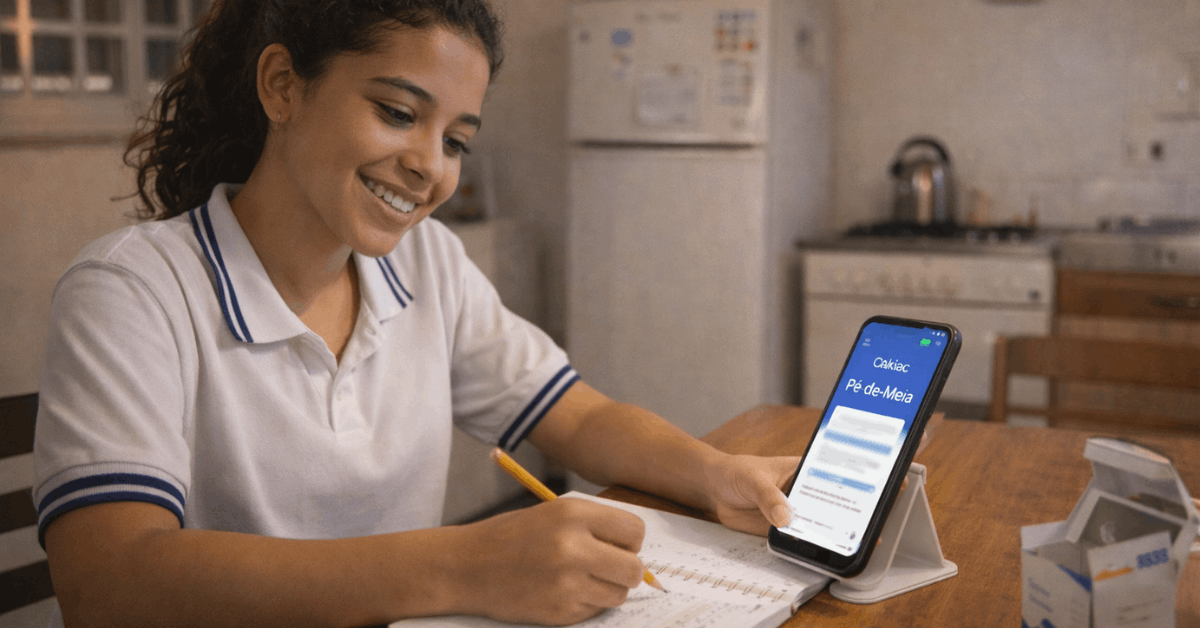
Digital tools reduce guesswork around status, calendar, and eligibility. Several official apps and portals show whether the student has been selected, which amounts have already been paid, and what still depends on attendance or school results.
Knowing these channels prevents unnecessary trips to bank branches or social assistance centers during the year.
- Caixa Tem app shows the balance, transaction history, and card features of the account that receives Pé-de-Meia transfers.
- Caixa Social Benefits app complements that view with a timeline of federal benefits linked to the CPF.
- The Student Journey app (Jornada do Estudante) connects directly to school data and the Pé de Meia payment calendar, helping track which incentives are already scheduled.
- The federal Citizen Portal and the Gov.br account centralize services, while the MEC call center at 0800 616161 answers questions about rules and eligibility.
- Checking these tools regularly keeps everyone informed of any attendance issues or missing payments.
Payment Access, Savings Rules, and Guardian Authorizations
All incentives are paid into a bank account in the student’s name, which Caixa automatically opens after the MEC confirms eligibility. The card or digital credentials linked to this account allow withdrawals at ATMs, online purchases, or use of a virtual debit card in the Caixa Tem app.
Guardians should help younger students learn basic financial control, since regular deposits and cash withdrawals will become part of their school year.
Not Every Amount Can Be Accessed Immediately
Enrollment and monthly attendance incentives are designed as short-term support, so those deposits are usually available for use once they show in the account.
Annual completion deposits and the ENEM-related amounts stay blocked as savings and only become withdrawable after graduation and confirmation of the high school completion certificate.
Authorization
Students under 18 always need a responsible adult to authorize and sometimes to move the funds. When the guardian is a parent already registered in Caixa Tem, the process often runs fully online.
When the guardian is another relative or legal representative, a visit to a branch with identification, CPF, and proof of enrollment may be required so Pé-de-Meia incentives can be accessed safely.
What To Do If Payments Or Data Have Problems
Errors can occur between school records, CadÚnico, and banking systems, so a quick reaction matters when something does not match program rules. Simple checks often solve the issue without needing legal support or intermediaries.
- When the CPF appears irregular or is not found, Receita Federal service points can regularize the document and update the status for use in Gov.br and banking apps.
- When the student’s name does not appear among Pé-de-Meia beneficiaries, school administration should verify enrollment data, attendance reporting, and whether CadÚnico information reached MEC before the calendar deadlines.
- When the Caixa Tem digital account is not opened or remains blocked, direct contact with Caixa via app support or a branch visit can unblock access or fix registration conflicts.
- When a specific installment is missing, checking all apps and contacting Caixa and the school helps identify whether the problem involves attendance, approval, or pure processing delay.
- Keeping printed or digital copies of enrollment proof, grade reports, and attendance summaries speeds these checks, since each institution will request documentation to confirm the right to receive pending amounts.
How Benefits Pé De Meia For High School Support Your Future
Financial stress often pushes teenagers into informal work or unstable jobs at the exact moment when education could raise long-term income.
Pé-de-Meia addresses that pressure directly, covering part of daily expenses while studies continue, and building a savings balance that becomes fully accessible after graduation.
That combination reduces the temptation to leave school early for short-term earnings that rarely compensate for the loss of a high school diploma.
Better Preparation for ENEM and Other Exams
Committing to attendance and yearly approval naturally prepares students better for ENEM and other exams linked to university or technical education.
The ENEM-related incentive also signals that participating in these assessments forms part of the educational journey, not an optional side task.
Over a few years, broader participation and lower dropout among low-income groups can improve national indicators for completion and learning, while individual students gain stronger chances in the job market.
Pé-de-Meia
Staying informed about rules, maintaining CadÚnico data, following attendance targets, and watching your digital account transform Pé-de-Meia from an abstract policy into concrete support.
When those habits stay in place, Benefits Pé de Meia for High School helps families protect study time, secure a full high school certificate, and open access to better opportunities after graduation.
Last Thoughts
Pé-de-Meia turns finishing high school into a concrete, financed goal that fits your daily reality. Instead of choosing between study and short-term income, you receive predictable support while attending, approval, and ENEM participation move your education forward.
When CadÚnico data stays updated, and school presence remains above the minimum, the program steadily builds savings in your name.
That combination helps your family keep you in public school now and strengthens your chances for university, technical courses, or better jobs after graduation.