

Brasil Sorridente, SUS’s national oral-health policy, guarantees free prevention, treatment, and rehabilitation through primary units, specialty CEOs, and hospitals.
This guide explains what is covered, how to enter via Conecte SUS or walk-ins, and how referrals move between tiers so you can secure care efficiently.
Expect zero fees, electronic records that follow you nationwide, and equity measures for underserved groups, offering a practical model that other systems can adapt.
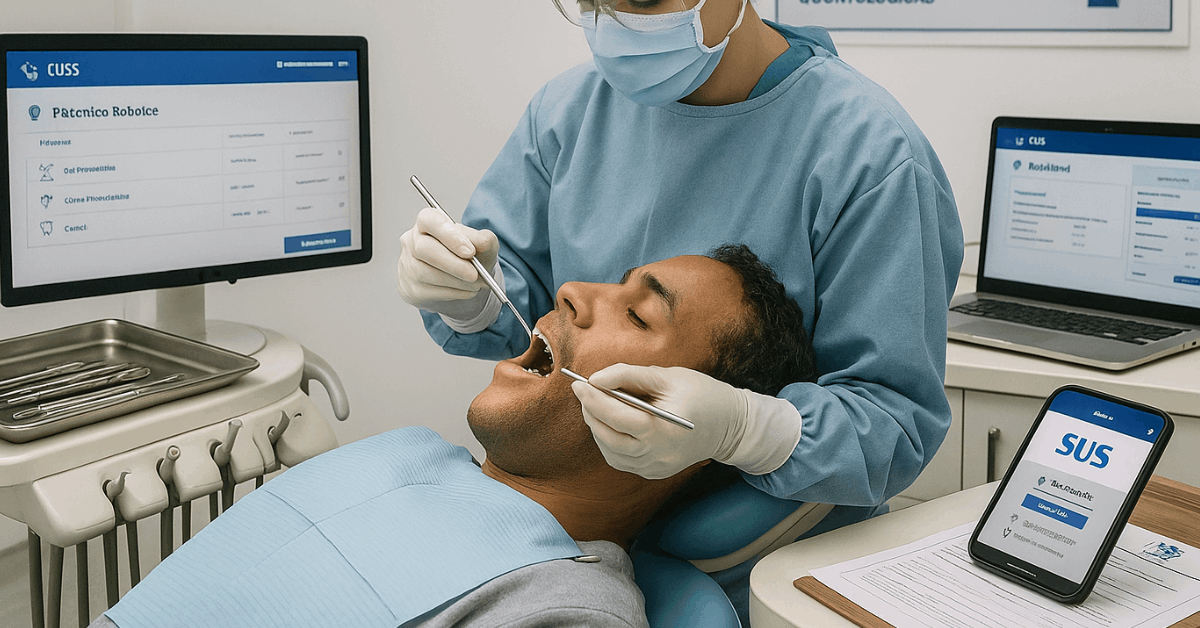
What the Program Is and Why It Matters
Brazil’s national oral-health policy, known as Brasil Sorridente, embeds free dental care within the public Unified Health System (SUS).
Launched in 2004, the policy guarantees access to prevention, treatment, and rehabilitation for every resident, regardless of income or location, while offering a transferable model that health planners can adapt.
Policy Foundation and Purpose
The policy replaced an extraction-heavy approach with a continuum that includes health promotion, preventive care, restorative treatment, specialty procedures, and prosthetic rehabilitation.
Universal Access and Comprehensive Scope
Coverage applies to all residents through SUS, removing point-of-care charges and aligning oral health with other essential services such as primary care and hospital support.
Integrated Delivery Network
Care is organized across primary units, Centers for Dental Specialties (CEOs) at the secondary level, and SUS-linked hospitals for tertiary cases, creating clear referral pathways.
Results and Remaining Gaps
Access expanded nationwide and outcomes improved, yet funding pressure, regional inequalities, and workforce distribution still require sustained policy attention.
Quick-Start Checklist for Patients
Uncertainty slows first access, in turn these steps streamline scheduling and referral.
- Install Conecte SUS and complete identity verification.
- Locate the nearest UBS that lists oral-health slots.
- Book digitally or arrive early carrying official ID and proof of residence if requested locally.
- Attend screening and accept immediate basic treatment when offered.
- Keep the referral slip if escalated to a CEO or hospital clinic.
- Return for follow-up to keep continuity and obtain preventive supplies.
A Legal Milestone That Protects Access
Dental care became a statutory right on 8 May 2023, when Bill 8.131/2017 amended the Organic Health Law to convert Brasil Sorridente from a ministerial program into law.
What Has Changed
Legal status prevents future administrations at any level from shelving or defunding oral-health guarantees, stabilizing planning and investment cycles.
Practical Effect for Patients
Protected funding and standards translate into predictable access, shorter policy swings, and stronger accountability for service continuity.
How the Treatment Pathway Works
Confusion about where to start wastes time; therefore, match needs to the correct level using this summary.
| Care level | Main facilities | Typical procedures | Referral trigger |
|---|---|---|---|
| Primary | Basic Health Units (UBS), Family Health Units (USF), Mobile Dental Units (UOM) | Check-ups, fluoride, sealants, simple fillings | Initial visit or routine follow-up |
| Secondary | Centros de Especialidades Odontológicas (CEOs) | Root canals, periodontal therapy, minor surgery, prosthetics assessment | Complexity exceeds primary scope |
| Tertiary | SUS-linked hospitals | Maxillofacial surgery, trauma, oncologic cases | Severe pathology or surgical need |
The step-up design lets clinicians escalate care without charging patients at any stage, while keeping records inside SUS for continuity.
Entry Points: Digital and In-Person
Missed slots and long lines add friction, which means picking the fastest entry saves time.
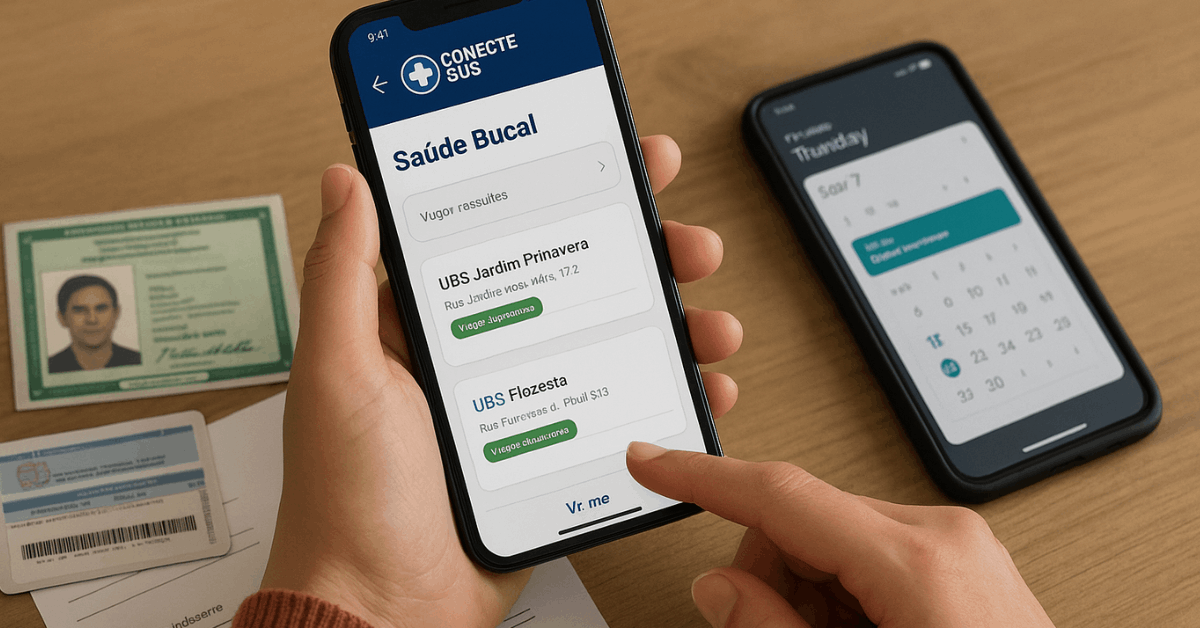
- Conecte SUS app: Register once, open Health Network, tap Oral Health, and view nearby UBS units with available schedules.
- Walk-in inquiry: Visit the closest public health unit and ask for the oral-health agenda; staff should add your name to the triage queue under SUS rules.
Both routes feed the same referral ladder, so either option leads to primary screening and onward care when required.
Core Services You Can Expect
Transparent expectations help patients move through care efficiently and secure appropriate procedures without repeat visits.
Promotion and Prevention
Dentists and hygienists deliver fluoride varnish, sealants for children, and structured education via schools, workplaces, and community programs to cut new decay.
Basic Restoration
Primary units provide resin or amalgam fillings, scaling and polishing for plaque control, and simple extractions when restoration is not feasible.
Specialty Care
CEOs handle endodontics, periodontics, initial orthodontic evaluations, minor oral surgeries, and prosthetic planning after a primary referral.
Rehabilitation and Prosthesis
Regional Dental Prosthesis Laboratories (LRPDs) manufacture full or partial dentures, including fitting and follow-up adjustments at no cost after referral.
Equity and Inclusion Commitments
Historical gaps in oral health require targeted action, and the policy prioritizes underserved groups to close them in Brazil.
Who Gets Priority
Rural families, riverine communities, Indigenous peoples, and people with disabilities receive proactive outreach and tailored education materials.
How Access Reaches Remote Areas
Mobile units, incentive payments, and location-based staffing policies draw professionals to low-coverage zones and improve adherence.
Network Scale and Workforce Strength
Scale supports reliability, and current capacity demonstrates sustained federal commitment.
Current Footprint
As of August 2024, the network comprised 34,729 Oral-Health Teams, 1,197 CEOs, 3,984 prosthesis laboratories, and 441 specialty oral-health services distributed across SUS.
Funding and Upgrades
Continuous federal transfers cover materials, staff development, and equipment renewal to stabilize supply chains and maintain service quality.
Jobs and Training
Public investment expands demand for dentists, hygienists, technicians, and support roles, strengthening local labor markets and clinical training pipelines.
Tangible Benefits for Patients
Hidden costs derail care plans; as a result, these program features remove common barriers.
- Zero direct cost: No consultation or materials fees at any tier.
- Continuity of care: Electronic SUS records follow patients nationwide.
- Broader health impact: Periodontal therapy reduces diabetes complications, and routine screening flags early oral cancers.
- Economic relief: Free dentures restore nutrition and employability without out-of-pocket spending.
Ongoing Challenges and Remedies
Geographic obstacles and execution delays still occur, and the response focuses on practical fixes rather than new promises.
Persistent Gaps
Parts of the Amazon and the semi-arid Northeast report infrastructure deficits, while budget execution varies across regions.
Planned Fixes for 2025–2027
Priorities include tele-dentistry pilots, satellite clinics to extend CEO reach, and real-time financing dashboards to track delivery.
What Patients Can Do Now
Conecte SUS includes feedback channels that allow outage reports and service quality complaints, creating direct accountability loops.
Takeaways for Brazil Health Planners
Elements that travel well deserve emphasis, since adaptation often matters more than wholesale copying.
Legal Entrenchment
Embedding oral health in core health law shields budgets and standards during political transitions.
Tiered Network
Aligning procedure complexity with facility capability reduces costs and wait times while clarifying patient flow.
Digital Triage
A single app front-end simplifies navigation for mixed literacy levels and lowers administrative overhead.
Equity Incentives
Payment rules tied to vulnerability indices move professionals toward high-need territories and improve fairness.
Conclusion
Universal dental care becomes operational when legislation, funding, and tiered delivery align under one data and financing roof.
Brasil Sorridente shows that a rights-based framework can expand free access nationwide while offering practical design lessons that other systems can adapt.