

Thinking about ditching college and heading straight to an oil rig sounds wild until the starting salary hits $40,000 to $60,000. That number changes the math for a lot of 20-year-olds fast.
Entry-level oil field jobs keep popping up on job boards in 2026 because this industry chews through new hires. The demand never really stops, even when prices swing.
But nobody quits an office job and shows up ready for rig work. Oil field jobs with no experience demand a specific kind of person, and the wrong fit burns out inside three weeks.
So let's talk about what entry-level oil field jobs look like when the recruiter isn't trying to sell you on the lifestyle. Real roles, real conditions, real pay.
Which Entry-Level Oil Field Jobs Can Hire Someone Green?
The oil field has a handful of roles designed for workers with zero experience. That said, "designed for beginners" and "easy" are two different planets.
Each of these positions puts a new worker on-site within days, doing physical labor alongside veterans who've been grinding for years.
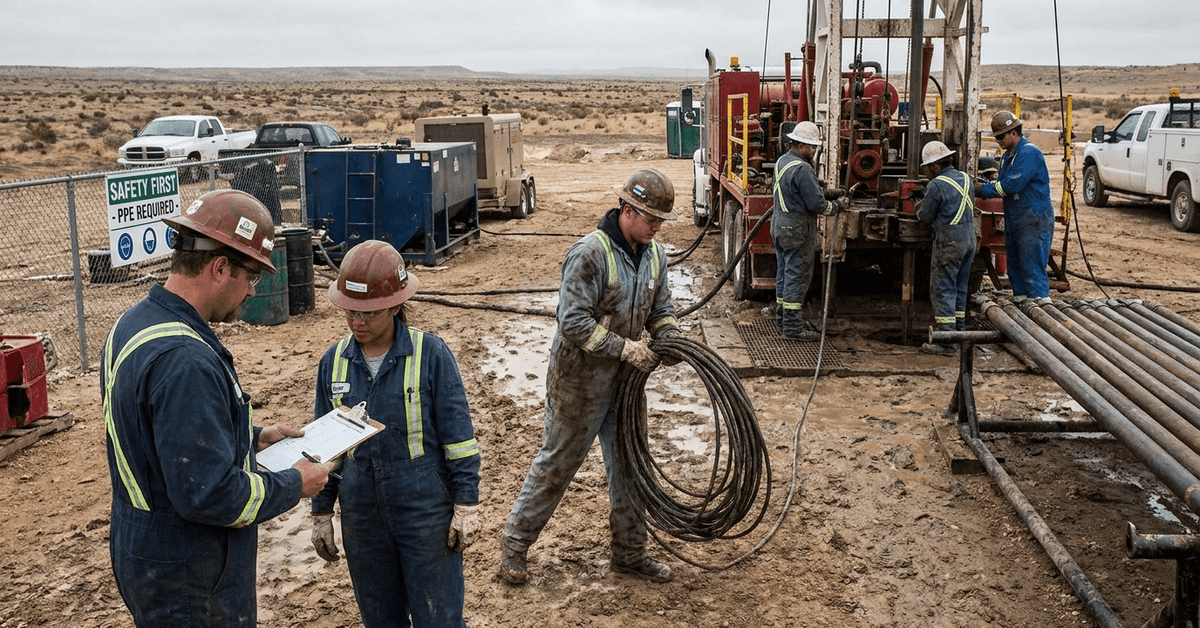
The four roles that hire the fastest for people with no direct oil field background break down like this:
- Roustabout: Maintenance, cleanup, equipment hauling. The catch-all position on any drilling site, and where the overwhelming majority of new hires start.
- Floorhand: Works directly on the drilling platform, handling pipe, tools, and heavy equipment under a driller's supervision.
- Lease operator: Monitors wells and runs daily checks on production sites. Some lease operators drive routes in company vehicles between multiple wells.
- General laborer/helper: Transport, supply runs, site cleanup. The lowest barrier to entry, but also often the lowest-paid of the four.
| Role | Experience Needed | Typical Starting Pay | Schedule Type |
|---|---|---|---|
| Roustabout | None | $40,000-$50,000/year | 12-hour shifts, rotational |
| Floorhand | None | $45,000-$55,000/year | 12-hour shifts, rotational |
| Lease Operator | None (driving record required) | $42,000-$52,000/year | Set daily routes |
| General Laborer | None | $38,000-$45,000/year | Varies by site |
Roustabout and floorhand roles tend to offer the fastest promotion track, since both positions sit closest to the drilling operation itself.
Roustabout vs. Floorhand: Which Starter Role Pays Off Faster?
I would pick a floorhand position over a roustabout at Halliburton or Schlumberger if the option existed, because floorhands learn the drilling process directly.
Roustabouts handle more generalized labor. That proximity to drilling operations is what separates a two-year path to driller from a four-year path.
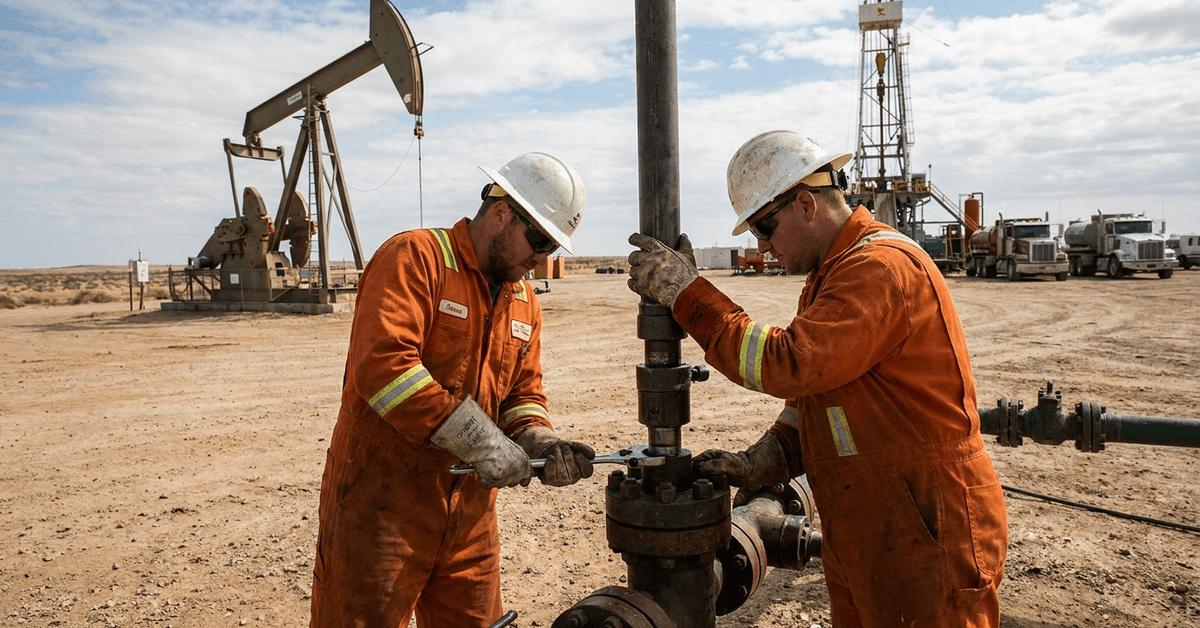
That said, floorhand openings fill faster because the work is more technical. A roustabout role is easier to land, and the lateral move to floorhand usually takes six months once a worker proves reliability.
Do Certifications Matter for No-Experience Oil Field Jobs?
Conventional wisdom says to stack up SafeLand, H2S Alive, and first aid certifications before applying. Every career blog repeats this advice.
I think spending $300 to $500 out of pocket on pre-employment certifications is a mistake for new oil field workers going through Schlumberger, Halliburton, or Baker Hughes.
The reason is simple. Large operators pay for all training during onboarding. They run their own safety orientation courses because they need workers trained to their specific standards.
A generic SafeLand certificate from a third-party school tells these companies almost nothing about whether a worker will follow their protocols.
When Pre-Hire Certifications Are Worth the Money
Small independent operators and staffing agencies are a different story.
Regional companies with fewer than 200 employees often expect walk-on hires to show up with basic safety cards already in hand. These operators don't run large-scale training programs.
So the question becomes: who are you targeting? If the application goes to a major company listed on Schlumberger's careers page, skip the out-of-pocket certifications.
If the application goes to a 40-person outfit in West Texas or the Permian Basin, those $150 safety cards may be worth the spend.
The Resume That Gets Callbacks
Forget listing "hard worker" or "team player." Recruiters at oil field companies scan for three things on an entry-level resume:
- Any job that involved physical labor: warehouse work, construction, landscaping, farming, or military service
- Proof of reliability: long tenure at a single job, perfect attendance records, references who can vouch for showing up on time
- A clean driving record and willingness to pass a drug screening: both are non-negotiable for every position listed above
A two-page resume loaded with retail experience won't move as fast as a one-page resume showing 18 months at a concrete company. Specificity beats length every time.
What Camp Life and Rotational Schedules Feel Like
Every article about entry-level oil field jobs mentions that the hours are long. Few bother describing what rotational camp life does to a person's daily existence.
A typical schedule runs 14 days on, 14 days off, or 21 days on, 7 days off. During the "on" stretch, workers live in temporary housing at or near the drill site.
Shared rooms, communal dining halls, limited cell service, and zero privacy. That stretch can feel like three months when the nearest town is 90 minutes away.
The Relationship Cost Nobody Mentions
This is the gap I see across every "oil field jobs for beginners" article online. The rotational schedule destroys relationships at a rate that no salary can fix. A 21/7 rotation means spending 75% of the year away from a partner, kids, or friends.
For a single 19-year-old with no mortgage and no dependents, that trade-off might feel invisible. For someone with a partner or a newborn at home, the same schedule creates a slow-motion problem that $50,000 a year won't solve.
The divorce rate among rotational oil field workers is a conversation that belongs in every career guide, not buried in a Reddit thread.
Physical Demands on 12-Hour Shifts
A 12-hour shift sounds manageable until it means hauling drill pipe in 105-degree heat or standing on a rig floor in a freezing Alberta wind.
The physical toll is real, and the body adapts over weeks. Some workers describe the first month as the hardest physical challenge they've ever faced.
Proper PPE helps. Steel-toe boots, fire-resistant clothing, hard hats, and safety glasses are provided or required by every operator. But gear doesn't eliminate the soreness of the first two rotations.
Career Growth After Landing an Entry-Level Oil Field Job
The pay bump between roustabout and driller can be dramatic. Drillers at major companies can earn $80,000 to $100,000 annually after a few years.
The path from general laborer to field supervisor follows a progression, but it moves at different speeds depending on the company, the region, and the oil price cycle.
That last part matters more than anyone admits. Oil prices drive hiring, layoffs, and promotions on the same timeline. A crash in crude prices can freeze promotions for 18 months across entire basins.
An entry-level worker who started during a boom may face a layoff during the next downturn, regardless of performance. The U.S. Bureau of Labor Statistics oil and gas employment data tracks these cycles over decades.
Paths Off the Rig Floor
Not everyone stays in the field forever. Oil field experience opens doors to related roles:
- Safety coordinator: Workers who pay attention to protocols and incident reporting can transition into HSE (health, safety, environment) roles
- Equipment specialist: Mechanics and heavy equipment operators are always needed, and the training starts on the rig
- Office and logistics roles: Procurement, scheduling, and training positions often go to workers with field backgrounds because they understand the operation firsthand
Why the "Career Ladder" Depends on Oil Prices
Promotions in oil and gas follow commodity prices more than individual merit. A drilling company adding 15 rigs in a $90/barrel market creates driller openings fast.
That same company pulling rigs during a $45/barrel downturn sends experienced workers back to entry-level positions at other companies.
Planning a 10-year oil field career requires watching WTI crude the same way a stock trader watches earnings reports.
It's an unusual requirement for what looks like blue-collar work on the surface, but that price sensitivity is the single biggest factor in long-term career stability.
Legal and Tax Details That Trip Up New Workers
Employment classification in oil and gas gets complicated. A new hire might be W-2 full-time at one company and 1099 contract at another, even for identical roles. Contract workers owe self-employment tax and don't receive benefits.
That distinction can mean a $5,000 to $8,000 difference in annual take-home pay on the same gross salary.
Workers assigned to rigs across state lines may owe income tax in multiple states. Keeping every pay stub and tracking work locations by date saves headaches during tax season.
Drug Testing and Background Checks
Drug screening is universal and ongoing. Random testing happens at every major operator, and a failed test results in immediate termination without exception. Background checks are standard at hiring, and some companies run them annually.
Workers with felony records may face barriers at large companies but can sometimes find openings at smaller independents. Every company sets its own policy, so checking directly with HR before applying saves time.
Questions People Ask About Entry-Level Oil Field Jobs
Q: Can a woman get hired for entry-level oil field positions?
Absolutely. Female workers are underrepresented in oil field roles, but recruitment has increased steadily since 2020. The physical requirements are identical, and companies cannot legally apply different hiring standards based on gender.
Q: How long does it take to get promoted from roustabout?
Typical promotion from roustabout to a specialized role like floorhand or field tech takes 6 to 18 months, depending on the company's staffing needs and the worker's performance. Boom-time markets speed this up considerably.
Q: Do oil field companies pay for travel to the work site?
Policies vary. Major operators like Baker Hughes and Weatherford often cover travel and lodging for rotational workers. Smaller companies may expect workers to arrange their own transportation to the nearest staging area.
Q: Is oil field work seasonal?
Drilling happens year-round, though some regions slow down during extreme winter conditions or spring breakup in northern climates. Seasonal slowdowns can reduce hours for entry-level workers, but full shutdowns are rare at established sites.
Q: What is the minimum age to work on an oil rig?
The standard minimum age is 18. Some sites operating heavy machinery or handling hazardous materials may require workers to be 21. Each job listing specifies its age requirement directly.
Conclusion
The entry-level oil field path works best for physically capable workers comfortable with isolation and long shifts. A $40,000 to $60,000 starting salary beats many desk jobs, but the lifestyle demands an honest self-assessment first.
Oil price cycles control career timelines more than hard work alone, and that reality separates informed workers from surprised ones. The rig floor is hiring in 2026, so the question is whether the trade-off fits your life right now.