
Scrolling through job boards at 2 a.m. hits different when every listing wants a bachelor's degree you never got. Food production jobs in the United States don't care about your diploma. They care about whether you can show up.
That alone makes this sector worth a closer look. The pay ranges might surprise you, and the career ceiling is higher than the internet gives it credit for.
But the advice floating around online about food production jobs is lazy. "Just get your foot in the door anywhere" ignores the fact that where you start shapes where you end up.
Not every food production plant pays the same, promotes the same way, or treats workers the same. Picking the right sub-sector and the right company is the part nobody bothers explaining.
Where Food Production Jobs Exist Across the US
The geography of food production employment is uneven, and that unevenness matters if you're planning a move or weighing commute times against pay.
States like California, Texas, Illinois, Arkansas, and Georgia concentrate the largest number of processing plants, but the type of work differs by region.
Midwest and Southern States for Meat Processing
Large-scale protein processing dominates in the Midwest and South. Companies like Tyson Foods and Smithfield run massive operations in Arkansas, Iowa, and North Carolina.
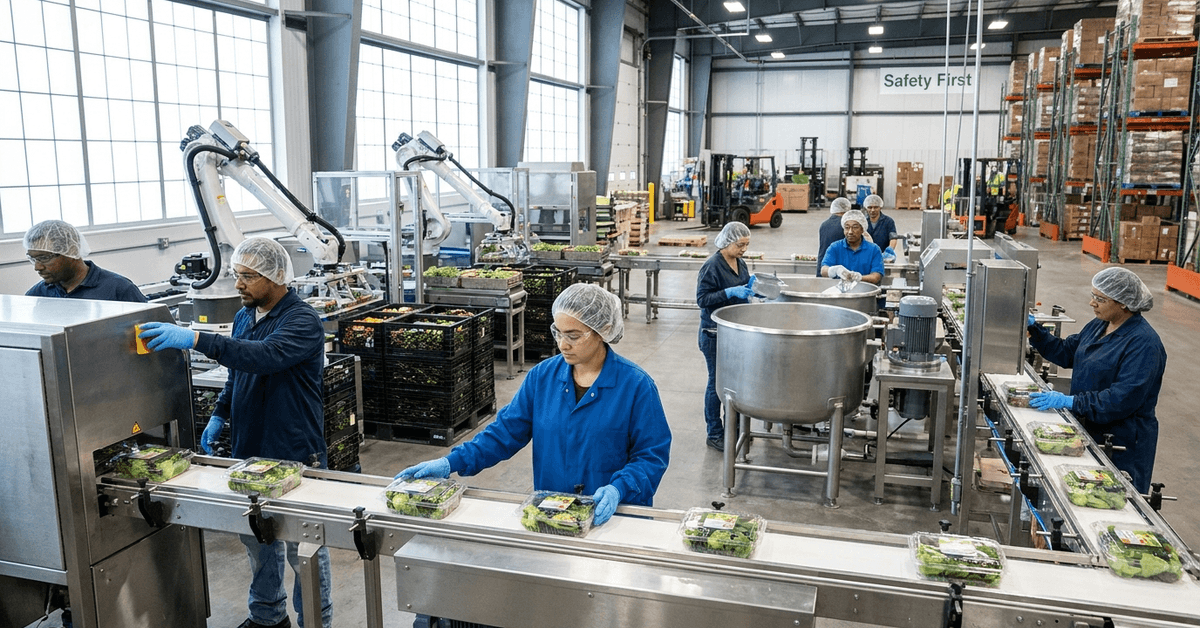
These plants tend to hire in volume and offer internal promotion tracks.
A floor worker at Tyson can move into a supervisory role paying $45,000 to $65,000 per year without a college degree, according to the company's own job postings on Indeed's food production listings.
Urban Centers and Plant-Based Startups
Cities like Los Angeles, Chicago, and New York have seen a wave of plant-based and specialty food companies opening production facilities.
These smaller operations tend to value flexibility and a willingness to learn new processes over years of traditional manufacturing experience.
The trade-off? Pay at startups can be less predictable, and benefits packages are often thinner than what Tyson or Smithfield offers.
How Region Affects Your Take-Home Pay
A line worker in rural Arkansas might earn $13 per hour, while the same role in a California facility could start at $17 per hour.
But cost of living eats into that gap fast. I would pick a Midwest plant paying $15 per hour over a coastal one at $18 per hour if the Midwest facility has a clear promotion ladder to $30 per hour for machine operators.
Types of Food Production Roles and What They Pay
The umbrella term "food production" covers a wide spread of roles. Lumping them together is a mistake because the physical demands, the skills required, and the pay ceilings are very different.
Processing and Assembly Line Positions
These are the entry points: line operators, packing specialists, sanitation workers, and food batchers.
The work is repetitive and physical. Expect to stand for 8 to 10 hours, often in cold or noisy environments. Annual pay typically falls between $25,000 and $35,000.
Common tasks at this level include:
- Assembling and packaging food products for shipment
- Cleaning equipment and workstations to meet hygiene standards
- Monitoring production lines for defects or slowdowns
- Recording batch numbers and weights for traceability
Machine Operation and Maintenance
Machine operators earn more because they handle the equipment that keeps the production line moving.
Salaries range from $32,000 to $45,000 annually, and techs who can troubleshoot breakdowns are especially hard to replace. Preventive maintenance aides fall into this bracket too.
Quality Assurance and Safety Roles
If repetitive physical work isn't your thing, quality assurance might be a better lane.
QA analysts, safety coordinators, and food inspectors check that products meet federal standards, run lab tests, and document compliance records. Pay ranges from $36,000 to $50,000 per year.
| Role | Annual Salary Range | Education Needed | Promotion Path |
|---|---|---|---|
| Line Worker | $25,000 - $35,000 | High school diploma/GED | Machine operator or team lead |
| Machine Operator | $32,000 - $45,000 | On-the-job training or tech certificate | Maintenance tech or shift supervisor |
| Quality Assurance | $36,000 - $50,000 | Some employers prefer an associate degree | QA manager or compliance lead |
| Supervisor | $45,000 - $65,000 | Internal promotion, no degree required at some companies | Plant manager |
The jump from line worker to supervisor can happen within 3 to 5 years at companies that promote internally, which makes the choice of employer matter as much as the choice of role.
Why "Start Anywhere" Is Bad Advice for Food Production Careers
This is the piece of common wisdom I disagree with. Every career blog says the same thing: just get your foot in the door, work hard, and opportunities will come.
I think that advice costs people years of earning potential because not every food production plant has a promotion ladder worth climbing.
I would tell a first-time applicant to compare Tyson Foods' internal training programs to a small regional bakery before accepting the first offer.
Tyson and Smithfield run structured programs that move floor workers into supervisory roles paying $45,000 to $65,000 per year. A smaller operation might cap your growth at $35,000 no matter how many years you put in.
The difference between a company that invests in upskilling workers and one that treats line positions as disposable is enormous. And that information is available on company career pages before you ever fill out an application.
Does that mean small plants are always worse? No. Some specialty food manufacturers offer unique skill development in areas like plant-based processing or organic certification, which can make your resume more interesting later. But go in with your eyes open about the pay ceiling.
Skills That Get You Hired and Promoted Faster
Forget the generic "be a team player" advice. Hiring managers at food production plants look for a specific set of traits that separate a short-term hire from someone worth investing in.
The skills that matter at the entry level are straightforward:
- Basic math: calculating batch weights, reading measurement tools, counting inventory
- Attention to detail around food safety: following process steps exactly, every time
- Physical stamina for standing, lifting, and repetitive motion across long shifts
- Willingness to work rotating shifts, including nights and weekends
What Gets You Promoted
The jump from line worker to machine operator or team lead depends on whether you learn the equipment.
Workers who volunteer for cross-training on different machines move up faster. A production floor has multiple stations, and the person who can run three of them is worth more than someone locked into one.
Food safety certifications also matter. Programs like ServSafe or HACCP training can separate two otherwise equal candidates when a supervisor position opens up. Some employers will pay for these certifications if you ask.
Automation Is Changing Food Production Jobs, Not Killing Them
The panic about robots replacing food production workers misses a detail. Automation in food plants has been growing for years, and the number of food production jobs in the US hasn't collapsed. What's changed is the type of work available.
New Roles Created by Automation
Plants that install robotic packaging lines or automated sorting systems need people to maintain, program, and troubleshoot that equipment.
Automation specialists, maintenance techs, and IT support staff for production lines are newer roles that didn't exist at most facilities 10 years ago.
These positions tend to pay at the machine operator level or higher, and the Bureau of Labor Statistics tracks production occupations with updated salary data at BLS Production Occupations.
The Compliance Boom
Stricter food safety regulations, both domestic and international, have pushed plants to hire more people in compliance, traceability, and documentation roles.
A worker who can manage food safety records or handle audit preparation brings a skill set that's harder to automate than packing boxes.
Questions People Ask About Food Production Jobs in the US
Q: Do food production jobs require a drug test?
Large employers like Tyson and Smithfield typically require pre-employment drug screening. Smaller operations may not, but assume it's part of the process until told otherwise.
Q: Can food production workers earn over $50,000 a year?
Supervisors and specialized roles like QA managers or maintenance leads can earn $50,000 to $65,000 annually. The timeline depends on the company's internal promotion structure and your willingness to cross-train.
Q: Are food production jobs seasonal or year-round?
The majority of positions at large processing plants are year-round. Some agricultural processing roles tied to harvest seasons (canning, freezing) may be seasonal, so check whether a posting is permanent or temporary before applying.
Q: What's the biggest downside of working in food production?
Repetitive motion injuries are a real concern, especially in assembly and packing roles. Cold processing environments and strong odors are common too. Ask about the plant's injury rate and ergonomic programs during interviews.
Q: Is food production a good career for someone without a GED?
Some plants hire without a GED, but advancement opportunities shrink considerably. Getting a GED while employed is worth the effort, and many larger employers offer tuition assistance programs that cover the cost.
Conclusion
Food production jobs across the United States offer a real path for workers who choose employers carefully. The salary gap between a dead-end line role and a $65,000 supervisor position comes down to company selection.
Automation is reshaping these plants, creating technical roles that pay more than traditional floor positions. Picking the right sub-sector and the right company is the single decision that matters most.