

Uber Eats Delivery Jobs offer a flexible way to earn by completing food and other eligible deliveries through the Uber Driver app. Depending on your city, you may be able to deliver using a car, scooter, bicycle, or even on foot.
You decide when to go online, while actual earnings depend on available requests, delivery distance, local demand, promotions, tips, and operating expenses.
This guide explains how Uber Eats delivery work operates, the different ways you can deliver, requirements, earning factors, expenses, and how to complete the official signup process.
How Uber Eats Delivery Jobs Work
Uber Eats delivery work is managed primarily through the Uber Driver app, allowing couriers to receive and manage delivery requests without following a traditional fixed shift.
Before accepting an eligible request, Uber generally displays important information such as the estimated fare, pickup and drop-off details, estimated time, and distance. Earnings can include the trip fare, applicable promotions, adjustments, and customer tips.
The typical process involves:
- Going Online – Open the Driver app and activate availability when you are ready to receive requests.
- Reviewing Delivery Offers – Check available information about the trip before deciding whether to accept it.
- Traveling to the Pickup – Follow navigation to the restaurant, store, or other pickup location.
- Confirming the Order – Verify the correct order before leaving the pickup location.
- Completing the Delivery – Follow the customer's instructions for handoff or contactless delivery.
- Tracking Earnings – Review completed trips, tips, promotions, and payment information through the app.
Uber says customers can tip through the platform and that couriers keep 100% of the tips they receive.
Ways You Can Deliver With Uber Eats
One advantage of Uber Eats delivery roles is that having a traditional car is not always necessary.
Available delivery methods vary by city, so your location can determine which options appear during signup.
Car Delivery
Delivering by car can work particularly well in suburban areas or markets where restaurants and customers are spread across longer distances.
Most eligible 2-door and 4-door vehicles can be used for food delivery, although vehicle and documentation requirements can vary by market.
The biggest consideration is cost. Fuel, maintenance, insurance, parking, and vehicle depreciation can significantly reduce the amount you actually keep.
Bicycle Delivery
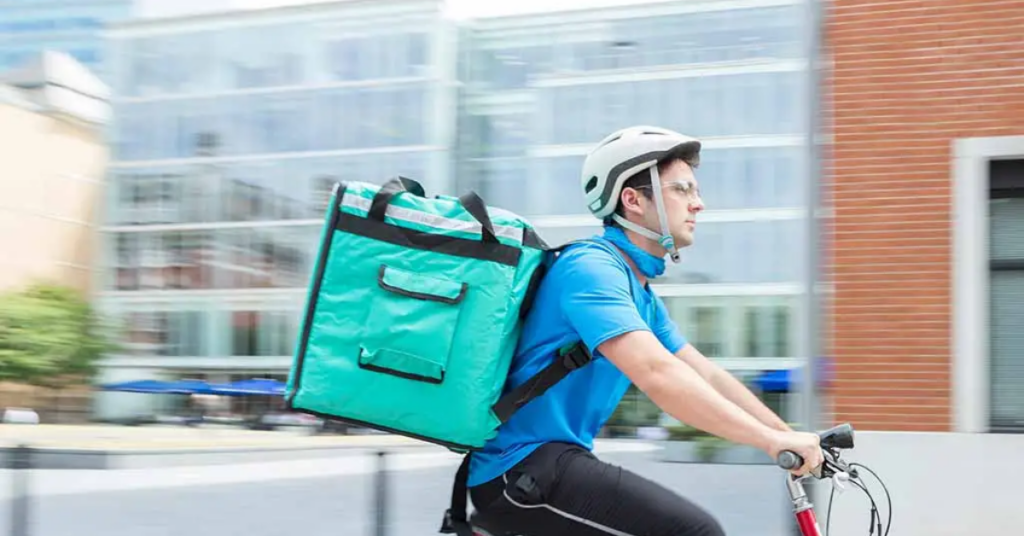
Uber Eats bike delivery can be attractive in dense urban areas where restaurants and customers are relatively close together.
Uber currently allows bicycle delivery in eligible markets, with applicants generally required to be at least 18 years old and provide government-issued identification and information for a background screening.
Bicycle delivery can also eliminate fuel expenses and reduce some vehicle-related costs.
Scooter or Motorbike Delivery
A scooter or motorbike provides greater range than a bicycle while often consuming less fuel and being easier to park than a car.
For U.S. delivery by motorbike or scooter, Uber currently lists a minimum age of 19 in most markets, along with a valid driver's license and information necessary for background screening. Local exceptions apply.
Licensing, insurance, registration, and other requirements can vary according to your location.
Walking Delivery
Uber also allows delivery on foot in some cities, making it possible to participate without owning a vehicle.
This option is generally most practical in extremely dense areas where restaurants, apartments, offices, and customers are concentrated within short distances.
Availability should be checked during registration because walking delivery is not offered everywhere.
Uber Eats Driver Pay: How Earnings Actually Work
There is no single guaranteed Uber Eats hourly pay rate that applies to every courier.
Uber explains that delivery fares depend on anticipated time and effort along with real-time factors in the local market. Before accepting an eligible trip, the app shows an upfront fare together with pickup, drop-off, distance, and estimated time information.
Your total earnings may include:
- Delivery Fares – Payment associated with completed delivery requests.
- Customer Tips – Uber states that couriers keep 100% of the tips received.
- Promotions – Eligible markets may feature opportunities such as Quest or Boost+.
- Adjustments – Additional payments may apply in certain markets or circumstances.
- Market-Specific Guarantees – Some locations have minimum earnings rules or guarantees established by Uber or local regulation.
Because these factors change, advertising one universal hourly figure can be misleading.
Your effective hourly earnings depend on both how much the app pays and how efficiently you complete profitable deliveries.
Gross Earnings vs. What You Actually Keep
One of the most important distinctions for new couriers is the difference between gross delivery earnings and net income.
A delivery that looks profitable before expenses can become much less attractive once transportation and operating costs are included.
Fuel
Car and motorcycle couriers must account for gasoline or charging expenses.
Long trips and heavy traffic can increase energy costs without necessarily producing proportional additional earnings.
Maintenance
Delivery work can quickly increase mileage.
Oil changes, tires, brakes, batteries, repairs, and scheduled maintenance should therefore be included when estimating actual profitability.
Vehicle Depreciation
Adding thousands of delivery miles can reduce the future resale value of a vehicle.
Although depreciation does not appear as an immediate charge after each trip, it remains a real long-term cost.
Insurance
Insurance requirements depend on the vehicle and location.
Review your existing policy carefully and verify whether additional coverage may be needed for delivery activity.
Smartphone and Data
A reliable smartphone and mobile data connection are essential because requests, navigation, communication, and delivery confirmation happen through the app.
Phone mounts and charging equipment can also become useful operating expenses.
Delivery Equipment
Uber notes that an insulated delivery bag is optional for standard bike deliveries, although using one can help control food temperature.
Couriers may also choose to purchase helmets, reflective gear, lights, portable chargers, rain protection, or other equipment.
Taxes
Delivery earnings can create tax obligations depending on your employment classification, income, jurisdiction, and personal circumstances.
Keep records of earnings and applicable expenses and consider qualified tax guidance when necessary.
What Can Reduce Uber Eats Delivery Earnings?
Working more hours does not automatically create better profit.
Efficiency matters because delays and expenses can reduce your effective hourly earnings even when the market appears busy.
Common problems include:
- Long Restaurant Waits – Time spent waiting can reduce the number of deliveries completed.
- Long-Distance Requests – Extra mileage increases operating costs.
- Traffic Delays – Congestion lowers the number of trips possible within an hour.
- Parking Problems – Difficult pickups and drop-offs can consume valuable time.
- Incorrect Addresses – Resolving customer location issues can lengthen a trip.
- Slow Demand Periods – Being online does not guarantee continuous requests.
- Vehicle Expenses – Fuel and maintenance can significantly reduce gross earnings.
- Poor Route Planning – Ending a delivery far from active restaurant areas may create unpaid return travel.
- Restaurant Bottlenecks – Busy kitchens may delay otherwise attractive requests.
Tracking these factors over several weeks can help reveal which locations and delivery types are actually profitable for you.
Uber Eats Delivery Requirements
Requirements for Uber Eats delivery jobs depend primarily on your location and chosen transportation method.
Uber's current U.S. requirements distinguish between motor vehicles and bike or walking delivery.
Delivering by Car
Uber currently lists these basic requirements for U.S. car delivery:
- Be at least 19 years old in most markets.
- Have an eligible 2-door or 4-door vehicle.
- Have a valid driver's license in your name.
- Provide a Social Security number for background screening.
Motor-vehicle delivery currently has a minimum age of 21 in California and New York State, illustrating why applicants should verify local requirements before signing up.
Delivering by Scooter or Motorbike
Typical requirements include:
- Be at least 19 years old in most eligible U.S. markets.
- Hold a valid driver's license.
- Provide required information for Uber's background screening.
Vehicle-specific documents may also be required based on local rules.
Delivering by Bike or on Foot
Uber currently lists these U.S. requirements:
- Be at least 18 years old.
- Have a government-issued ID.
- Provide a Social Security number and other requested personal information for background screening.
Walking delivery is available only in some locations.
Background Screening and Documents
New delivery applicants must complete Uber's account verification process before they can begin receiving requests.
Uber says new couriers need to register, consent to screening, provide requested documents, and submit a profile photo.
Depending on your transportation method, prepare items such as:
- Government-issued identification
- Driver's license
- Vehicle information
- Insurance documentation where required
- Profile photograph
- Social Security number for U.S. screening
- Personal and contact information
Providing current and clearly readable documentation can help prevent unnecessary delays.
Ready to Deliver With Uber Eats?
If the requirements match your situation, you can begin registration directly through Uber rather than using an unofficial job application website.
START YOUR UBER DELIVERY SIGN-UP
ACCESS THE OFFICIAL UBER DRIVER SIGN-UP
The signup platform will show the transportation options and specific requirements available for your location.
How to Sign Up for Uber Eats Delivery
The Uber Eats driver signup process can be completed online.
The exact steps may vary slightly by city and transportation method.
Step 1: Create Your Uber Account
Access Uber's official delivery registration platform and enter the requested personal information.
Existing Uber drivers can add food delivery through the Work Hub inside the Driver app instead of creating a completely separate account.
Step 2: Choose How You Want to Deliver
Select an available transportation method, such as:
- Car
- Bicycle
- Scooter or motorcycle
- Walking, where supported
The choice determines which requirements and documents you will need.
Step 3: Submit Required Documents
Upload identification and any transportation-specific documentation requested during registration.
Make sure photographs and scans are clear and that documents have not expired.
Step 4: Complete the Background Screening
U.S. couriers must undergo a background screening before activation.
Processing time varies according to documentation and screening circumstances.
Step 5: Wait for Account Activation
Uber states that after all necessary information is provided, account activation can range from a few minutes to around 48 hours depending on document and background-check processing. This is an estimate rather than a guarantee.
You will be notified when the account becomes eligible to receive delivery requests.
Step 6: Set Up Your Payment Information
Add your payment details inside the platform.
Uber offers weekly deposits as well as eligible faster cash-out options, with applicable fees for some methods.
Step 7: Go Online
Open the Driver app and select Go when you want to receive requests.
You can then review available offers and decide which eligible deliveries to accept.
When Is the Best Time to Deliver?
There is no single schedule that works equally well in every city.
Demand changes according to restaurant activity, customer behavior, weather, events, seasonality, and local competition.
Common periods worth testing include:
- Lunch hours
- Dinner periods
- Friday and weekend evenings
- Major sporting events
- Busy downtown periods
- Areas with large concentrations of restaurants
- Dense residential neighborhoods
- Periods when the app shows stronger local demand
Uber provides an in-app delivery heatmap showing areas with different demand levels, which can help couriers decide where to position themselves.
Instead of relying on generic internet advice, compare your own results by day, hour, and neighborhood.
Strategies for More Efficient Deliveries
Increasing gross earnings is only part of the objective.
A stronger strategy focuses on the amount you retain for every hour and mile spent working.
- Check Distance Before Accepting – Compare estimated fare with the total travel required.
- Know Your Operating Cost – Estimate what each mile costs in fuel, maintenance, and depreciation.
- Watch Restaurant Wait Times – Identify locations that repeatedly create long delays.
- Use the Demand Map – Position yourself near active areas rather than driving around without a request.
- Track Your Hours – Measure earnings from the moment you go online, not only active delivery time.
- Record Mileage and Expenses – Accurate records make it easier to understand actual profitability.
- Protect Your Ratings – Follow delivery instructions and communicate when genuine problems occur.
- Avoid Chasing Promotions Blindly – Consider whether the extra distance required to complete a promotion actually improves your net income.
Uber Eats Delivery Jobs: Pros and Cons
Before signing up, compare the flexibility of delivery work with its operating costs and income variability.
Advantages
- Choose when to go online.
- Several transportation methods may be available.
- View upfront information about eligible delivery requests.
- Keep 100% of customer tips according to Uber.
- No traditional fixed work schedule.
- Track earnings through the Driver app.
- Eligible promotions may increase earnings.
- Bike and walking options can reduce transportation costs.
Potential Drawbacks
- Earnings are not guaranteed.
- Demand can vary significantly.
- Vehicle expenses can reduce profit.
- Waiting time may lower effective hourly earnings.
- Driving increases wear and mileage.
- Weather and traffic can affect productivity.
- Some markets have different eligibility rules.
- Taxes and financial recordkeeping require attention.
Frequently Asked Questions
How old do you have to be to deliver for Uber Eats?
In the U.S., Uber currently requires bike and walking couriers to be at least 18. Car, scooter, and motorbike delivery generally requires applicants to be at least 19, although motor-vehicle couriers in California and New York State currently need to be at least 21.
Can you deliver Uber Eats without a car?
Yes. Uber allows bike delivery in eligible markets and even walking delivery in certain cities.
How much do Uber Eats drivers make?
There is no universal guaranteed hourly amount. Earnings are affected by the fare attached to individual requests, market conditions, promotions, tips, demand, time spent online, and operating expenses.
Do Uber Eats drivers keep their tips?
Uber states that delivery couriers receive 100% of customer tips.
Does Uber Eats require a background check?
Yes. U.S. delivery applicants are required to complete a background screening before activation.
Do you choose your own hours?
Couriers can decide when to go online and receive eligible delivery requests through the Driver app. Availability of requests depends on local demand.
Can I deliver Uber Eats by bicycle?
Yes, in supported markets. Uber currently requires U.S. bicycle couriers to be at least 18 and provide government-issued identification and information for screening.
How do I apply for Uber Eats delivery?
Apply through Uber's official driver and delivery platform, choose an available delivery method, upload the required documents, complete screening, and wait for account activation.
Final Takeaway
Uber Eats Delivery Jobs can provide a flexible earning option for people who want greater control over when they work.
The platform supports several delivery methods depending on location, including cars, scooters, bicycles, and walking in selected cities. Earnings are variable, so evaluating trip distance, demand, tips, operating expenses, and unpaid time is essential when deciding whether delivery work is worthwhile.
Before starting, confirm the requirements for your city, calculate your likely transportation costs, and prepare the documents required for screening.
If delivery work fits your circumstances, complete registration only through Uber's official platform and evaluate your real net earnings after you begin.