

Verivox Energy and Gas lets you compare electricity and gas tariffs in Germany using your postal code and usage.
You can check total costs, contract terms, and bonuses before you choose a provider.
This article shows you how to compare correctly, avoid cost traps, and switch with confidence.
What Verivox Is
Verivox is a German comparison platform that lets you review energy tariffs based on your location and usage.
You use it to compare offers before switching electricity or gas providers.
What You Can Compare
Use these comparison points to avoid picking a tariff based only on a low headline price. Each item changes your real cost, your flexibility, or your risk level.
- Electricity Tariffs – Plans matched to your postal code and expected kWh use.
- Gas Tariffs – Offers for home gas supply based on your usage profile.
- Total Annual Cost – Estimated full-year cost including fixed and usage charges.
- Base Price (Grundpreis) – Fixed monthly fee you pay even with low usage.
- Usage Price (Arbeitspreis) – Price per kWh that drives most of the bill.
- Contract Duration – Commitment length before you can switch without fees.
- Notice Period – The deadline you must meet to cancel on time.
- Price Guarantee – Protection against increases for a defined period.
- New Customer Bonus – Discounts that apply only if you meet the conditions.
- Green Options – Eco electricity or gas labels and what they claim to cover.
- Payment Setup (Abschlag) – Monthly prepayment level and billing rhythm.
- Provider Service Signals – Ratings and support quality indicators.
What You Need Before You Start Comparing
Prepare these details so the comparison reflects your real situation and avoids pricing errors. Accurate inputs lead to accurate offers.
- Postal Code – Sets your grid area and available providers.
- Annual Consumption (kWh) – Drives the price calculation for electricity or gas.
- Household Size – Used to estimate usage if kWh data is missing.
- Meter Number – Identifies your specific energy connection.
- Meter Type – Standard or smart meter affects readings and billing.
- Current Provider – Required for switching and cancellation handling.
- Contract End Date – Prevents early termination fees.
- Notice Period – Defines when you can cancel without penalties.
- Payment Method – Usually SEPA direct debit for billing.
- Moving Date (if applicable) – Changes contract timing and options.
How Pricing Works in Germany
Energy prices are composed of fixed and variable components, not a single rate.
Understanding each component helps you compare offers correctly.
- Base Price (Grundpreis) – Fixed monthly fee you pay regardless of usage.
- Usage Price (Arbeitspreis) – Cost per kWh that scales with consumption.
- Grid Fees – Charges for using local energy networks.
- Taxes and Levies – Government charges are included in every tariff.
- VAT (Mehrwertsteuer) – Standard value-added tax applied to energy bills.
- Regional Pricing – Costs vary by postal code and grid area.
- Market Costs – Wholesale energy prices influence tariffs over time.
- Electricity vs Gas Differences – Each has different cost drivers and fees.
How to Use Verivox Filters Correctly
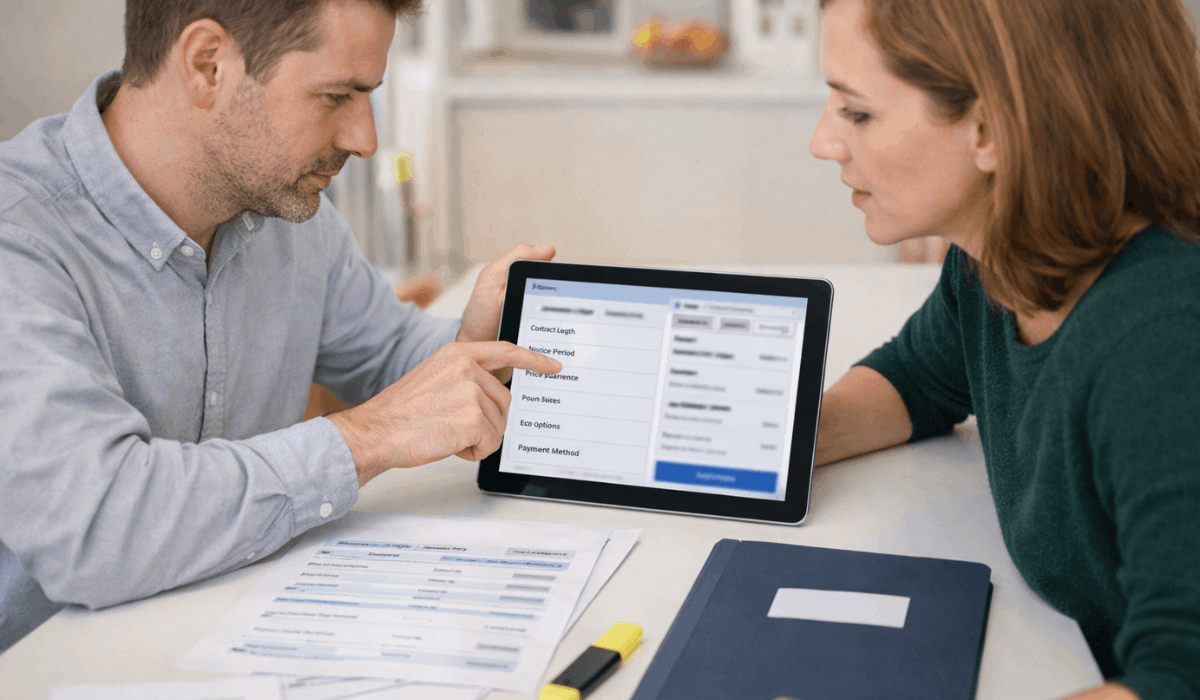
Filters help you narrow results, but wrong settings hide better tariffs. Use them to control costs, manage risk, and maintain flexibility.
- Contract Length – Choose how long you are locked into the tariff.
- Notice Period – Filter offers by cancellation flexibility.
- Price Guarantee – Set protection against price increases.
- Payment Method – Limit results to monthly SEPA billing.
- Bonus Inclusion – Decide whether bonuses are included in price ranking.
- Eco Tariffs – Show green electricity or green gas only.
- Provider Type – Filter by known brands or local suppliers.
- Customer Ratings – Exclude providers with weak service feedback.
- Upfront Payments – Avoid tariffs that require advance payment.
Bonuses, Discounts, and Real Total Cost
Bonuses lower the first-year price but can hide higher long-term costs. You need to separate discounts from the real tariff value.
- New Customer Bonus (Neukundenbonus) – Paid only after meeting contract conditions.
- Instant Bonus (Sofortbonus) – Applied early, often within the first months.
- Bonus Eligibility Rules – Missed payments or early exit can cancel bonuses.
- First-Year Price – Often includes bonuses and looks cheaper than it is.
- Price After Bonus – Real ongoing cost once discounts end.
- Minimum Contract Term – Leaving early usually voids bonuses.
- Cashback Offers – Extra savings with limits and payout delays.
- Voucher Restrictions – Often non-cash and time-limited.

Switching Process Step by Step
Switching is mostly paperwork and timing, not a service interruption. Follow these steps so the change happens smoothly and on schedule.
- Pick a Tariff – Select the offer that matches your real annual cost and terms.
- Enter Personal Details – Provide your name, address, and contact info for the contract.
- Add Consumption Data – Confirm kWh usage so pricing and prepayments are accurate.
- Provide Meter Details – Enter meter number and current supplier information.
- Choose Payment Method – Set up SEPA direct debit for monthly billing.
- Submit the Switch Request – Verivox forwards the request to the new provider.
- Cancellation Handling – The new provider usually cancels the old contract for you, but not always.
- Get Confirmation – Save the contract summary, start date, and tariff terms.
- Share Meter Reading if Asked – Some providers request a reading for the switch date.
- Check First Invoice – Confirm pricing, bonus tracking, and Abschlag amount.
Special Living Situations
Your living situation can change how switching works and which tariffs apply. These cases need extra attention to avoid billing or contract issues.
- Moving Apartments (Umzug) – Switching timelines depend on your move-in date.
- Default Supply (Grundversorgung) – You are placed here automatically if no contract exists.
- New Apartment Without Supplier – You can switch immediately without notice periods.
- Shared Meters – Consumption may be split or estimated across households.
- Landlord-Managed Supply – You may not be allowed to choose your own provider.
- Sub-Meters – Billing depends on internal meter readings, not the grid operator.
- Gas for Heating vs Cooking – Different usage patterns affect tariff choice.
- Student Housing – Energy may be included in rent, blocking individual contracts.
Common Mistakes and How to Avoid Them
Most switching problems come from wrong inputs or ignored contract details. These mistakes are easy to avoid if you check them early.
- Wrong Consumption Estimate – Use last year’s bill instead of guessing.
- Ignoring Notice Periods – Check deadlines before submitting a switch.
- Bonus Misunderstanding – Read payout conditions and timing carefully.
- Focusing Only on First-Year Price – Compare costs after bonuses expire.
- Short Price Guarantees – Match guarantee length to market conditions.
- Missing Confirmation Emails – Save all documents and tariff summaries.
- Overlooking Payment Rules – Avoid tariffs requiring advance payment.
- Not Rechecking After One Year – Set a reminder to compare again.
After You Switch: What to Check
The switch is not finished until billing and payments are correct. Check these points to avoid overpaying or losing bonuses.
- Contract Start Date – Confirm the supply begins on the agreed date.
- First Bill Accuracy – Match prices to the contract summary.
- Meter Reading Date – Ensure readings align with the switch date.
- Monthly Prepayment (Abschlag) – Check the amount matches your usage.
- Bonus Tracking – Verify bonuses are recorded and scheduled.
- Price Guarantee Details – Confirm coverage and end date.
- Provider Contact Info – Save support channels for future issues.
- Renewal Date – Set a reminder to compare before renewal.
Final Takeaway
Using Verivox Energy and Gas works best when you compare total costs, contract terms, and bonuses with care.
Double-check pricing details, notice periods, and guarantees before you commit.
Start your comparison now and switch only when the numbers clearly work in your favor.