

A one-bedroom rental in Oklahoma costs about $895 per month. The same size unit in New York runs $2,660. That gap, over $1,700 a month, is enough to fund an entire second rent payment somewhere else.
Cheap houses for rent exist in every state. But finding one that matches the specific mix of location, condition, and lease terms a real person needs takes a different playbook than scrolling Zillow for 20 minutes.
This article is for remote workers, relocating families, and anyone earning under $50,000 who needs a rental house below $1,000 a month and refuses to sign a lease blind.
Where Cheap Rental Houses Show Up in 2026
The rental market split in the U.S. is wild right now. The national average rent hit $1,663 per month as of July 2026, a year-over-year increase of 0.8%.
But that number hides massive variation between states and even between neighborhoods in the same city.
Cheapest States for Renting a House
The states with the lowest one-bedroom rents include Oklahoma at $895, West Virginia at $914, Arkansas at $931, North Dakota at $935, and Iowa at $955. Those are averages. Individual listings run even lower in smaller towns.
Arkansas has monthly rents for one-bedroom apartments ranging from $600 to $1,000 across most of the state. The capital, Little Rock, stays affordable. Bentonville and Fayetteville have seen growth but remain below national benchmarks.
The Wage Trap Nobody Calculates
I would skip any state where average rent savings get canceled out by lower local wages, and that includes most of rural Mississippi and West Virginia. A state where rent is 40% cheaper but wages are 30% lower may not save money at all.
A $900 rent in a market where the median income supports $1,200 does nothing for someone who also took a $15,000 pay cut to move there.
Remote workers earning coastal salaries in low-rent states keep far more of their income than they would in the Bay Area or New York metro.
If the paycheck stays the same and the rent drops by $800 a month, the savings are real.
Best Platforms for Finding Cheap Rental Houses
Not all rental listings end up on the same sites. The cheapest houses, especially single-family homes owned by individual landlords, tend to scatter across less obvious places.
Major Rental Websites
Zillow, Apartments.com, and Realtor.com carry the widest selection. All three let renters filter by price, bedroom count, pet policy, and move-in date. For a broad search, they are the starting point.
The largest share of U.S. rentals, about 32%, fall between $1,001 and $1,500 per month. Houses priced under $900 show up less frequently on these sites because many low-cost landlords skip the listing fees.
Local Sources That Big Platforms Miss
I think the best cheap houses for rent never touch Zillow or Apartments.com, and the FTC's own rental scam data backs this up: scammers target those big platforms precisely because that is where volume-driven searchers congregate.
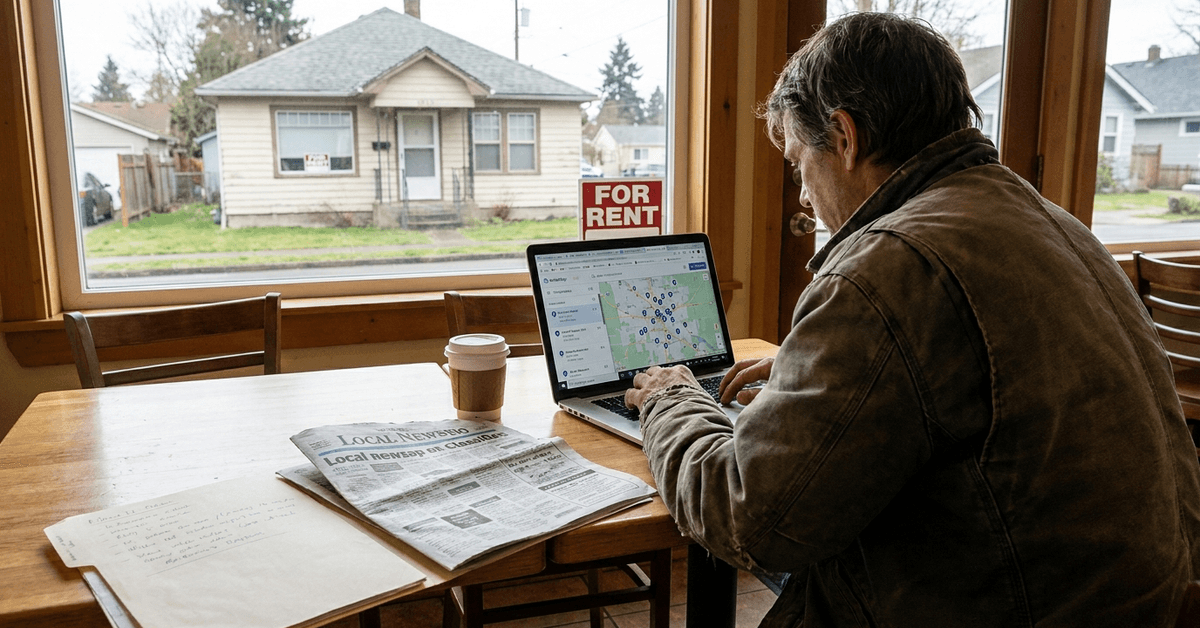
Small-town landlords post on community Facebook groups, Craigslist, local newspaper classifieds, and even grocery store bulletin boards. The listings are rougher. The photos are worse.
The trade-off:
- less standardization,
- fewer protections, and
- the need to verify the landlord independently.
But the rent is often $100 to $300 below what similar properties ask on major sites. These landlords avoid platform fees and attract tenants through word-of-mouth instead.
Rental Scams Targeting Budget Renters in 2026
Cheap rental seekers face a specific risk. Scammers know that a person searching for below-market rent is more likely to move fast on a listing that looks too good.
The FTC reports that nearly 65,000 rental scams have been reported since 2020, with losses totaling about $65 million. The median loss per scam was $1,000, which for a budget renter could represent an entire month's rent plus deposit.
How Scammers Operate
Scammers create fake listings by copying real ones, changing the contact information, and reposting them on a different site. Many would-be renters discover that the scammer copied an ad for a property that was listed for sale, not for rent.
The biggest platform for rental fraud is Facebook. About half of people who reported a rental scam said it started with a fake ad on Facebook. Another 16% pointed to Craigslist.
Scam red flags every cheap-house searcher should check:
- Below-market rent with no explanation: if a three-bedroom house costs $600 in a market where similar homes list for $1,100, verify ownership through the county assessor's office before sending money
- Requests for payment before viewing: legitimate landlords do not demand deposits through Zelle, Venmo, or wire transfer before a walkthrough
- Refusal to meet in person: scammers set up self-guided tours using lockbox codes copied from real listings
- Pressure to share sensitive information early: requests for Social Security numbers or credit score screenshots before a lease is signed are red flags
Age and Vulnerability
People ages 18 to 29 were three times more likely than other adults to report losing money to a rental scam. Younger renters searching for cheap housing through college Facebook groups and shared sublet boards are the primary targets.
The FTC's rental scam resource page has a full breakdown of warning signs and reporting steps.
Renting a Cheap House vs. a Cheap Apartment
The decision between a house and an apartment at the same price point involves costs that go beyond monthly rent. This table compares the two across practical categories.
| Category | Cheap Rental House | Cheap Apartment |
|---|---|---|
| Average Monthly Rent | $900 to $1,200 (varies by state) | $800 to $1,100 (varies by state) |
| Utilities | Tenant pays all, typically $150 to $300/month | Often partially included |
| Maintenance | Lawn care, minor repairs often fall on tenant | Handled by management |
| Space | More square footage, private yard | Smaller, shared common areas |
| Pet Policy | Usually more flexible | Stricter, often with added fees |
| Lease Length | Negotiable, sometimes month-to-month | Standardized 12-month terms |
Houses cost more in hidden upkeep, but the space and flexibility advantage can justify it for families or pet owners.
Applying for a Cheap Rental Without Losing It
Competition for affordable rentals moves fast. Listings under $1,000 in desirable areas can receive dozens of applications within days.
Documents to Prepare in Advance
Having a ready-to-go application folder cuts response time. Landlords who manage a handful of properties often pick the first qualified applicant rather than sorting through a pile.
The standard package includes:
- Pay stubs or proof of income covering the last 30 to 60 days
- Photo ID and a second form of identification
- References from a previous landlord or employer
- Credit report pulled within the last 90 days (a free annual report from AnnualCreditReport.com works)
Negotiation Tactics That Work on Small Landlords
Individual landlords respond to different incentives than property management companies.
Offering a longer lease term, agreeing to handle minor maintenance, or proposing a slightly earlier move-in date can reduce rent by $25 to $75 per month. On a $900 rental, that adds up.
Houses that sit vacant for more than 30 days cost landlords money. A reasonable offer paired with complete documentation often beats a higher bid from someone who cannot move for six weeks.
Lease Terms That Catch Budget Renters Off Guard
A low monthly rent does not always mean a low total cost. Lease fine print in cheap rentals sometimes includes clauses that add up.
Early termination fees on budget rentals can run as high as two months' rent. Some landlords require tenants to cover specific repairs up to a dollar threshold, often $100 to $250 per incident.
Utility responsibility clauses matter too: a house with no insulation and electric heating can add $200 to $400 in winter utility bills that the listed rent never hinted at.
Read the lease for early termination penalties, repair responsibility thresholds, utility allocation, and renewal terms. A $50 per month savings on rent means nothing if the lease locks in a $1,800 penalty for breaking early.
Questions People Ask About Cheap Houses for Rent
A few questions come up constantly when people search for budget-friendly rental homes.
- Q: What is the cheapest state to rent a house in 2026? Oklahoma holds the top spot for overall rental affordability, with average one-bedroom rents around $895 per month. West Virginia and Arkansas follow closely. Keep in mind that rural areas in these states may have limited job markets, so remote work changes the equation significantly.
- Q: Can I find a house for rent under $500 a month? Possible, but rare and location-dependent. Small towns in Mississippi, West Virginia, and parts of Arkansas occasionally list older houses in this range. Expect dated interiors, limited amenities, and the need to verify the listing is legitimate before sending any deposit.
- Q: How do I know if a cheap rental listing is a scam? Search the property address online and check if it appears as a for-sale listing elsewhere. Refuse to send money before touring the property in person. Legitimate landlords do not ask for deposits through cash apps or wire transfers before signing a lease.
Conclusion
Cheap houses for rent still exist in every U.S. state, but the search takes more effort than a quick scroll. Oklahoma, Arkansas, and West Virginia offer the lowest rents, though remote work income changes the math entirely.
Scams targeting budget renters hit $65 million in losses since 2020, so verifying every listing is non-negotiable.
The renters who land the best deals prepare documents early, search local sources, and negotiate directly with landlords who want a reliable tenant fast.