

Every food delivery platform in Chile tells you earning is simple. Download the app, upload your Cédula de Identidad, and start collecting orders within days.
That pitch leaves out the 15.25% tax retention that Chile's SII deducts from every boleta de honorarios you issue in 2026. Food delivery jobs in Chile classify drivers as independent contractors, not employees.
This article is for anyone in Santiago, Valparaíso, or Concepción weighing a first gig driving job or a side hustle on weekends. Specifically, if you have never issued a boleta de honorarios before.
How Food Delivery Driver Pay Works in Chile
Food delivery drivers in Chile earn per order, with amounts varying by platform, distance, and time of day. No platform publishes a fixed hourly rate because you are a contractor, not a salaried worker.
The Boleta de Honorarios Problem
Every payment you receive from PedidosYa, Rappi, or Uber Eats must be reported through a boleta de honorarios electrónica filed with Chile's Servicio de Impuestos Internos (SII).
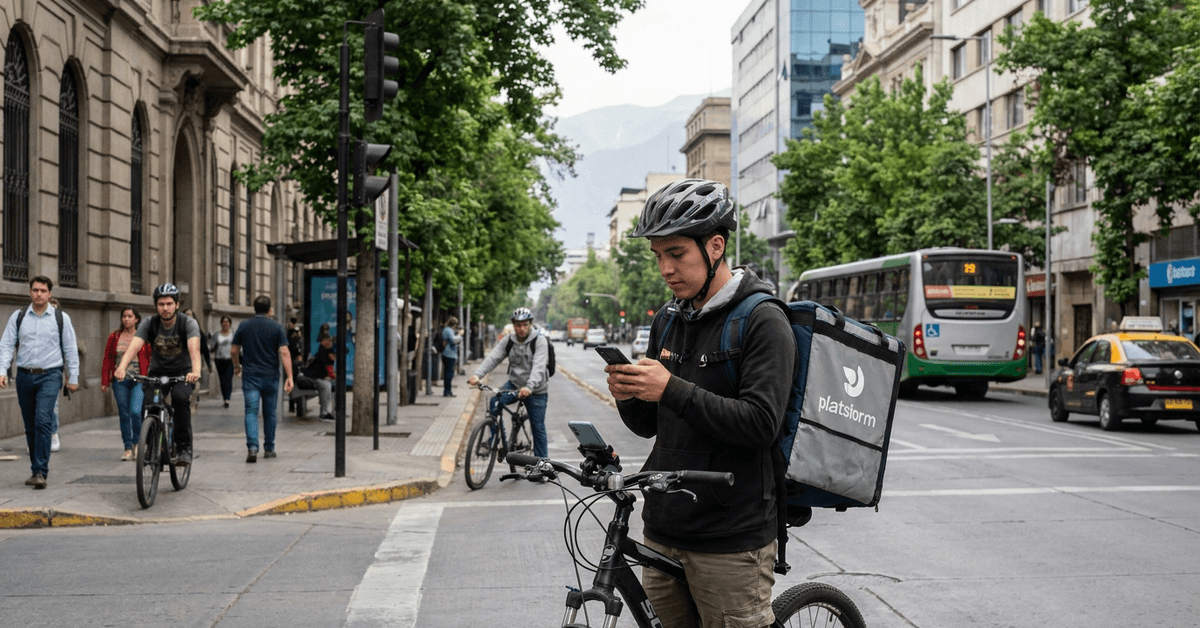
Ley 21.133 set a gradual retention increase that hit 15.25% of gross earnings starting January 1, 2026. That rate was 14.5% in 2025, climbs to 16% in 2027, and reaches 17% in 2028.
I would have assumed the retention is a pure loss when I first looked at the SII schedule.
It covers AFP pension, Fonasa health, and workplace accident insurance (ATEP). So the 15.25% funds real benefits. But you still lose access to that cash monthly.
What CLP 1,000,000 Gross Looks Like After Retention
On a gross monthly billing of CLP 1,000,000, you receive CLP 847,500 net. The remaining CLP 152,500 goes to SII.
You can claim up to 30% of annual honorarios as presumed expenses during the Operación Renta in April, but that refund depends on your total annual income bracket.
Chile's minimum wage sits at roughly CLP 539,000 per month as of early 2026. A delivery driver billing CLP 700,000 gross keeps about CLP 593,250 after the retention.
That puts take-home right around minimum wage territory for what might be 40+ hours of riding per week.
Which Platform Should You Pick in Chile?
PedidosYa, Rappi, and Uber Eats control nearly all food delivery volume in Chile. Each has a different coverage map, payment cycle, and driver incentive structure.
PedidosYa
PedidosYa is a Delivery Hero subsidiary operating in 15 Latin American countries. Statista data from 2021 pegged its Chilean market share at roughly 29%, the largest single slice.
The platform has its own quick-commerce warehouses (PedidosYa Market) in Santiago, which means some drivers handle grocery and convenience orders too.
Rappi
Rappi offers food, grocery, pharmacy, and parcel delivery. The multi-category model means you can fill dead hours between meal rushes with non-food orders.
Rappi operates in Santiago and has been expanding to secondary cities, though coverage outside the capital remains thinner.
Uber Eats
Uber Eats runs on a global app infrastructure, so the driver interface may feel more polished if you have used Uber for ridesharing. City coverage in Chile is more limited than PedidosYa or Rappi.
| Feature | PedidosYa | Rappi | Uber Eats |
|---|---|---|---|
| Order types | Food, groceries, quick-commerce | Food, groceries, pharmacy, parcels | Food primarily |
| Coverage | Widest across Chilean cities | Santiago + expanding | Select cities |
| Payment cycle | Weekly | Weekly | Weekly |
| Multi-category gigs | Yes (PedidosYa Market) | Yes (RappiCargo, RappiFavor) | Limited |
My take: Rappi's multi-category system gives drivers the most order volume flexibility during off-peak hours like 3 p.m. to 6 p.m.
Sign-Up Requirements for Delivery Drivers in Chile
The registration process for all three platforms follows a similar pattern. You need to be at least 18 years old and have a valid identification document.
Required documents for most platforms:
- Cédula de Identidad (Chilean national ID) or valid temporary visa for foreign nationals
- A smartphone with reliable data and GPS capability
- Driver's license and vehicle registration (Padrón) if using a motorbike or car
- A clear selfie photo matching your ID
Bicycle couriers skip the license and registration step. Some platforms run basic criminal background and traffic record checks, though minor infractions typically do not disqualify candidates.
The Vehicle Decision
I think most new drivers default to bicycles because the upfront cost is lower, but in Santiago, motorbike couriers consistently cover more distance per hour. That translates to more completed deliveries per shift.
The trade-off is fuel, insurance, and maintenance costs eating into your margin. A used motorbike in Chile runs roughly CLP 500,000 to CLP 1,500,000 depending on condition.
You will also need a Class C license (motorized two-wheeler) and liability insurance. Factor those costs into your first three months of projected earnings before committing.
Peak Hours and Earning Strategy
Lunch rush runs from 12 p.m. to 3 p.m. and dinner from 7 p.m. to 10 p.m. on most platforms. Those six hours generate the majority of a driver's daily income.
Why Working Only Peak Hours Can Backfire
Conventional wisdom says to log in only during peak windows and log off the rest of the day. I disagree with that approach for new drivers on PedidosYa or Rappi, because both platforms use rating and completion-rate algorithms that reward consistency.
A driver who logs 30 hours per week across varied time slots tends to receive priority order routing over a driver who appears only during the six busiest hours.
The algorithm treats you as more reliable when your availability pattern is stable. New drivers who cherry-pick peak-only shifts often find their order flow dries up after the first two weeks because the system deprioritizes inconsistent accounts.
Gear That Pays for Itself
Do not skip the thermal delivery bag. Restaurants in Chile increasingly refuse to hand over orders to drivers without one.
A portable phone charger rated at 10,000 mAh or higher keeps you online through a full shift. Cyclists need a helmet: Chilean traffic law (Ley de Tránsito 18.290) requires it, and platforms can deactivate accounts after a reported safety violation.
Tax Filing and Legal Status for Chilean Delivery Drivers
Food delivery work in Chile falls under segunda categoría income taxation. You are self-employed, responsible for your own social security contributions, and required to file annually during the Operación Renta each April.
SII Registration and Boleta Issuance
You issue boletas de honorarios electronically through the SII portal. The platform paying you (or its local subsidiary) withholds the 15.25% and remits it to SII on your behalf.
If your annual honorarios income stays below approximately CLP 11,265,804 (the exempt threshold under the Impuesto Global Complementario), you may recover most of the retention as a refund.
Foreign Nationals and Visa Requirements
Non-Chilean citizens need a valid work permit or visa that allows independent contractor activity.
Each platform has different documentation requirements for migrants, so check the specific recruitment page before submitting your application. An expired visa or permit will block your account activation.
Questions People Ask About Food Delivery Jobs in Chile
These are common searches from people considering delivery work in Chile for the first time.
- Q: Can I work for PedidosYa and Rappi at the same time?
Yes, no platform in Chile enforces exclusivity for independent contractors. You can toggle between apps during a single shift. Just manage your active orders carefully to avoid late deliveries that tank your rating on both platforms simultaneously. - Q: How much can a food delivery driver earn per month in Chile?
Earnings vary wildly by city, vehicle type, and hours worked. Full-time motorbike couriers in Santiago billing 40+ hours per week often gross between CLP 600,000 and CLP 900,000 monthly. After the 15.25% boleta retention, net pay drops to roughly CLP 508,500 to CLP 762,750. - Q: Do I need to register with SII before starting delivery work?
Yes. You need an active tax profile (iniciación de actividades) on the SII website to issue boletas de honorarios. The process is free and can be done entirely online, but allow a few business days for activation. - Q: Is food delivery in Chile safe for bicycle couriers?
Santiago's cycling infrastructure has expanded, but traffic accidents involving delivery cyclists remain a concern. Wear a helmet, use lights at night, and stick to designated bike lanes where they exist. Some platforms offer basic accident coverage during active deliveries, but read the specific terms during your onboarding. - Q: Does Uber Eats operate in all Chilean cities?
No. Uber Eats has a narrower coverage map than PedidosYa or Rappi in Chile. Check the Uber Eats driver sign-up page for your city before creating an account, because applying for an uncovered zone wastes your time and locks your registration in a queue.
Conclusion
Chile's food delivery gig economy offers real flexibility, but the tax math changes everything about your expected take-home pay. Run your numbers through the 15.25% retention before committing to a vehicle purchase or quitting a salaried job.
The platforms make signing up easy, and that ease hides the financial homework you still need to do. Start with one platform, learn the algorithm, and expand once your rating stabilizes above 4.7.