

A food delivery driver in Mexico earns roughly 4,000 to 8,000 MXN per week depending on platform, vehicle type, and city. Your vehicle, your city, and the hours you pick matter more than which app logo sits on your bag.
One thing that trips people up fast: you're a contractor, not an employee. No health insurance. No paid sick days. No vacation payout. That single detail changes the math on whether this gig makes sense for you.
This article is for anyone in Mexico City, Monterrey, or Guadalajara weighing a delivery gig as a side income source or a bridge between jobs. If you want a clear picture of the application process, the platform differences, and the tax stuff nobody wants to talk about, keep reading.
What Does a Food Delivery Driver Do in Mexico?
A food delivery driver in Mexico accepts orders through a smartphone app, picks up food or goods from a restaurant or store, and drops them off at a customer's address.
The role is classified as independent contracting on every major platform operating in the country as of 2026.
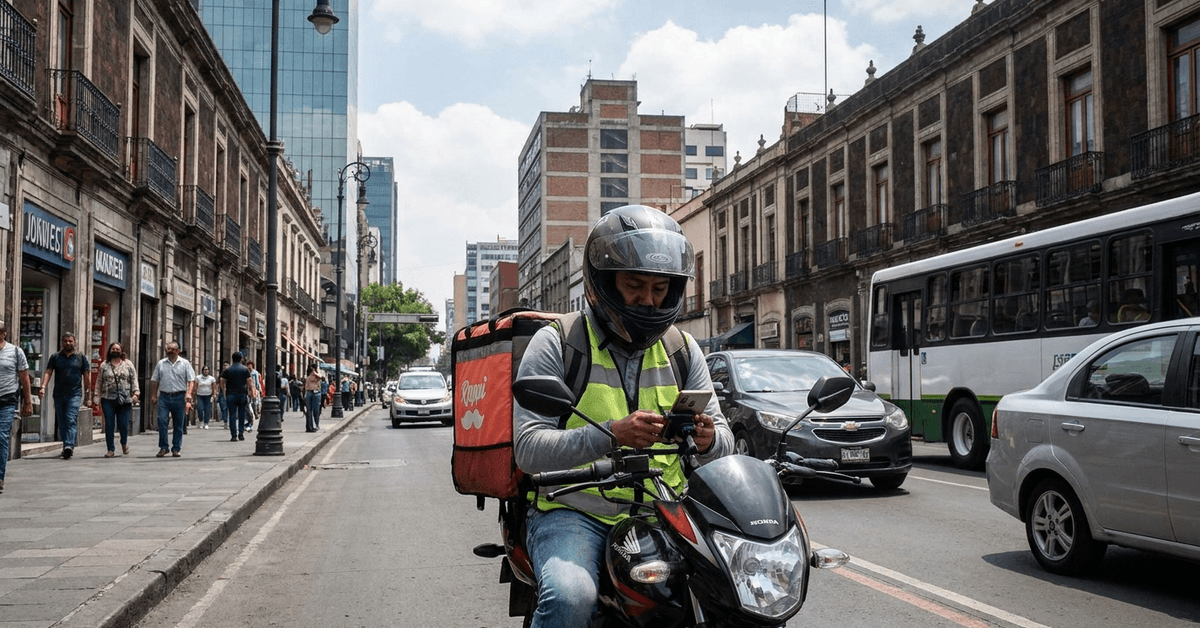
That contractor label means you set your own schedule. Log in when you want. Log off when you want. No manager texts you at 6 AM asking you to cover a shift.
Bicycle vs. Motorcycle vs. Car
Motorcycles dominate in dense cities like CDMX and Guadalajara because they cut through traffic faster.
Bicycles cost almost nothing to operate and work well for short-distance drops in flat neighborhoods. Cars eat into your margins with fuel and parking but let you handle larger orders.
The App Management Side
Each delivery involves accepting a ping, checking the restaurant location, picking up the order, and following GPS to the drop-off. Sounds simple.
But juggling two or three simultaneous orders during a Friday dinner rush takes quick decision-making and solid phone navigation skills.
Requirements to Become a Delivery Driver in Mexico
Every platform asks for a few non-negotiable documents. Getting these together before you start the application saves you days of back-and-forth with support teams.
You need to be at least 18 years old. A valid INE (voter ID) or passport is required. If you're delivering by motorcycle or car, you need a current driver's license for your vehicle class. Some platforms also request recent proof of residence.
Vehicle Documents and Insurance
A bicycle needs to be roadworthy but rarely requires formal permits. Motorcycles and scooters need proof of registration and insurance.
Cars require up-to-date third-party liability coverage and a clean driving record. Platforms check these documents during onboarding.
Background Checks
Uber Eats, DiDi Food, and Rappi all run background checks. A minor traffic ticket probably won't disqualify you.
Serious violations or a criminal record likely will. The exact threshold varies by platform, and none of them publish a clear list of disqualifiers.
How to Apply for Food Delivery Jobs in Mexico Step by Step
The entire process happens digitally. You download the driver app, submit your documents, and wait for approval. Most people finish the active part in under 30 minutes.
Start by downloading the partner or driver version of your chosen platform's app. Create an account with your phone number and email. Double-check every field. A typo in your name or ID number can stall the review for days.
Uploading Your Documents
Upload clear, well-lit photos of your INE, driver's license (if applicable), vehicle registration, and a recent selfie. Blurry uploads get rejected and push you to the back of the review queue.
Onboarding and Activation
Some platforms require a short online training module covering app usage, delivery etiquette, and local traffic rules. Once your documents pass review, you get a notification.
Approval typically takes one to three business days, though holiday periods can stretch that timeline.
Uber Eats, DiDi Food, and Rappi: Which Platform Pays More?
The three dominant food delivery platforms in Mexico are Uber Eats, DiDi Food, and Rappi.
Each one handles pay, bonuses, and driver support differently. Many drivers sign up for two or three simultaneously and switch between them depending on which app is offering better incentives that week.
| Feature | Uber Eats | DiDi Food | Rappi |
|---|---|---|---|
| Onboarding speed | 1-3 days | 1-2 days | 2-5 days |
| Bonus promotions | Regular weekly quests | Competitive surge pay | Frequent order-count bonuses |
| Order types | Food only | Food only | Food, groceries, retail, cash |
| App usability | Polished, intuitive | Mixed reviews | Functional, busy interface |
Rappi stands out because it handles more than food. Grocery runs, pharmacy pickups, retail deliveries, and even cash withdrawals fall under its umbrella. That variety can keep your queue full during slow food hours.
My Take on Multi-Apping
I would sign up for both Uber Eats and Rappi if I were starting in CDMX or Monterrey. Uber Eats has the most consistent order volume for food. Rappi fills the gaps between meal rushes with non-food deliveries.
DiDi Food works as a third option, but its app interface frustrates enough drivers that I'd test it before committing time to it.
How to Earn More as a Delivery Driver in Mexico
Earning more per week comes down to three decisions: when you work, where you park yourself between orders, and how you handle your app rating.
Lunch (12 PM to 2 PM) and dinner (7 PM to 10 PM) are peak demand windows across all three platforms. Positioning yourself near business districts, universities, or dense apartment clusters during these hours puts you closer to order pings.
Promotions and Bonus Structures
Platforms run weekly challenges. Complete 30 deliveries by Sunday and earn an extra 500 MXN.
Work during a rainstorm surge and get 1.5x base pay per order. These bonuses rotate, so checking your app dashboard every morning is a habit worth building.
Why Your Rating Matters More Than Speed
A 4.8-star rating gets you priority order assignments over a 4.5-star driver in the same zone.
Quick deliveries help, but polite communication helps more. A short text message saying "on my way, 5 minutes" when you leave the restaurant costs nothing and bumps your rating over time.
Taxes and Legal Stuff Drivers Skip Over
Food delivery drivers in Mexico are classified as self-employed independent contractors. That means you handle your own taxes, your own insurance, and your own retirement planning. No platform withholds income tax for you.
Registering with SAT
Registration with Mexico's Servicio de Administración Tributaria (SAT) is required if your annual income exceeds the reporting threshold.
You need to declare earnings, issue invoices (facturas), and keep records of expenses like fuel, phone data, and vehicle maintenance.
The SAT registration portal walks you through the process, though the interface can be confusing the first time.
Insurance Gaps You Should Know About
Motorcycle and car drivers must carry current third-party liability insurance by law. Some platforms offer minimal accident coverage while you're on an active delivery, but that coverage disappears the moment you mark an order as delivered.
I think relying on platform-provided insurance alone is a mistake, especially for motorcycle drivers in CDMX where accident rates run high.
A separate personal policy costs roughly 3,000 to 6,000 MXN per year and covers gaps that platform insurance ignores entirely.
Who Should and Shouldn't Take a Food Delivery Job in Mexico
Delivery work fits students who need income around class schedules, people between jobs who need cash flow within days, and anyone testing whether gig work suits them before committing to a full-time freelance setup.
It fits poorly if you need stable monthly income with benefits. The contractor model means your earnings fluctuate week to week. A rainy Tuesday might bring 40 orders. A sunny Wednesday might bring 12.
If you need predictable pay to cover rent and utilities, this gig introduces stress that a salaried position doesn't.
Drivers who own their vehicle outright earn more net income than those making loan payments. That detail gets overlooked constantly. A motorcycle payment of 2,500 MXN per month can eat 30% or more of weekly delivery earnings in slower periods.
Questions People Ask About Food Delivery Jobs in Mexico
These are the questions people search when they're seriously considering signing up, not just browsing.
- Q: Can foreigners work as food delivery drivers in Mexico?
Yes, but you need valid immigration documentation that permits work activity in Mexico. A tourist visa does not qualify. Platforms require a CURP or RFC number for tax purposes, so temporary resident status or higher is the practical minimum. - Q: How much do Uber Eats drivers make per hour in Mexico?
Earnings vary between 80 and 150 MXN per hour during peak times in large cities. Off-peak hours can drop that to 40 or 50 MXN. Vehicle type and zone selection make a bigger difference than the platform itself. - Q: Do I need to speak Spanish to deliver food in Mexico?
Functionally, yes. Customer messages, restaurant staff interactions, and app notifications all default to Spanish. You can manage with basic conversational Spanish, but zero Spanish knowledge creates friction on nearly every order. - Q: Is Rappi or Uber Eats better for new drivers in Mexico?
Rappi tends to offer more order variety and keeps queues fuller outside meal hours. Uber Eats has a smoother onboarding process and a more intuitive app. Starting with both and comparing your first two weeks of earnings gives you real data instead of guesswork.
Conclusion
Food delivery jobs in Mexico offer fast entry into gig work with real earning potential in 2026. The contractor model gives you schedule freedom but zero safety net for insurance or benefits.
Comparing platforms, tracking your expenses, and registering with SAT early separates drivers who profit from those who burn out. Pick your vehicle, pick your city, and test two platforms side by side before going all in.