

The Payoneer Card has become an increasingly popular solution for those managing income or expenses across borders.
If you’re freelancing, running a small online business, or maybe you work remotely or travel often—this payment tool presents a way to move money with much less hassle.
For anyone looking to save time on international payments, possibly avoid some traditional banking frustrations, or simply better organize their finances, learning more about how the Payoneer Card works can be quite valuable.
What is the Payoneer Card and Who is it For?
At its core, the Payoneer Card is a prepaid Mastercard issued by Payoneer. Rather than being a credit card or linked directly to your bank account, the card lets users spend funds loaded onto their Payoneer account.
There’s no need for a credit check, and eligibility is tied to your activity and verification within the Payoneer system. In my experience, it’s often used by freelancers, remote workers, digital business owners, and others who get paid from overseas platforms or clients.
- Freelancers and gig workers accepting payments from abroad
- E-commerce sellers (eBay, Amazon, Fiverr, Upwork, and more)
- Digital agencies or startups working with international clients
- Remote employees or contractors
- Anyone who travels and wants to simplify currency conversion
Main Features of the Payoneer Card
What stands out about the Payoneer Card is its flexibility and convenience for global transactions. Let’s break down some of its primary features, though keep in mind, specific benefits may change slightly depending on your country or platform partnership.
Worldwide Acceptance
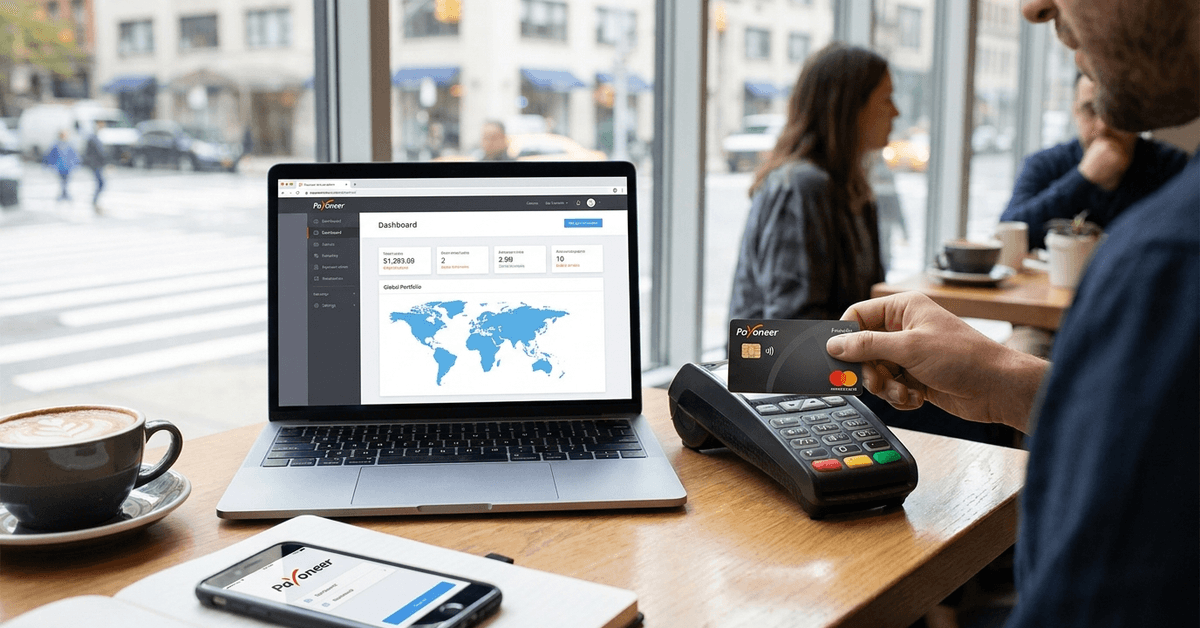
The card uses the Mastercard network, so it works anywhere Mastercard is accepted—online, in physical shops, and at millions of ATMs worldwide.
Not every situation requires cash these days, but sometimes you want a physical card for peace of mind, or maybe online subscriptions, which is where Payoneer adds flexibility.
Multiple Currency Support
Accounts can hold balances in several major currencies (USD, EUR, GBP, and more). Most people, even those who aren’t tech-savvy, can appreciate the ability to avoid surprise conversion fees when spending abroad. The card’s multi-currency setup can help limit these headaches.
Direct Access to Marketplace Earnings
If you get paid via sites like Upwork, Fiverr, Airbnb, or Amazon, you can often withdraw directly to your Payoneer account—and spend from the card almost immediately. For freelancers or sellers who used to wait days for bank transfers, that’s a real time saver.
Integrated Payment Management
The web and mobile Payoneer dashboard shows all your balance, card, and transaction details. It’s—at least for me—less cluttered than some traditional online banking interfaces.
That being said, no system’s perfect. Sometimes notifications are slightly delayed, but most users report reliable tracking overall.
ATM Withdrawals and Online Purchases
You can use the Payoneer Card to pull local currency from ATMs (subject to fees) or make non-cash purchases online or in-store.
It’s convenient, but as with many cards, ATM fees or conversion charges may apply. That’s worth checking based on where you live.
Security and Card Management Tools
The card comes with standard security options—PIN setup, online/offline blocking, and transaction alerts. There is also customer support, though responses can be delayed during peak periods.
It’s reassuring that, if you lose the card, you can pause it with a few clicks in the app—although some have said resolving card replacement issues can take time.
Eligibility Requirements for the Payoneer Card
Getting a Payoneer Card is not exactly like ordering a typical prepaid debit card. There are certain eligibility requirements, and perhaps some users are surprised by this extra step. Still, once you understand the basics, the process is straightforward.
Minimum Account Activity
Generally, you must first sign up for a Payoneer account and receive at least $100 in payments from Payoneer’s partner networks or clients. This rule is a way for Payoneer to confirm user legitimacy and reduce fraud.
Just opening an account doesn’t guarantee immediate card access—it’s based on your incoming funds.
Identity Verification
After crossing the minimum payments threshold, you’ll need to submit identity and address documents.
Exact requirements vary by country, but usually, a government ID and a recent utility bill or bank statement will do. From what I’ve seen, this step helps protect users and comply with financial regulations.
Jurisdictional Limitations
Payoneer’s services are not available everywhere. Some countries and regions are restricted due to banking laws or international sanctions. If you’re unsure, you might want to check Payoneer’s official help pages for updated lists of supported countries.
Benefits of Using a Payoneer Card
While not flawless, the Payoneer Card offers several notable advantages, especially for those juggling international income or frequent cross-border expenses.
Simplified Access to Global Earnings
Money from different sources can go into one account, and you can use your card almost instantly. There’s something to be said for being able to use earnings from a European client to buy lunch locally—without jumping through hoops or waiting days for a wire transfer.
Lower Transaction Costs (Sometimes)
Compared to traditional wire transfers and some bank withdrawal methods, Payoneer’s internal transfers or spending via the card may involve smaller fees.
However, this can vary. I’ve heard some users notice ATM or conversion surcharges, especially in less common currencies. It pays to review the current fee schedule in your profile.
Streamlined Expense Management
Your spending history, downloadable reports, and real-time balance updates can make it easier to track business or personal budgets. Admittedly, the interface might take some getting used to if you’ve never used an online wallet before.
Multi-Currency Flexibility
Holding and spending in multiple currencies reduces the need to rely on local banks. If you regularly travel for work or leisure—or get paid in various currencies—this becomes a real time-saver.
Not Dependent on Local Banks
For some, local banks’ account opening barriers or online transfer limits can be challenging. Payoneer can be an alternative (not a replacement), offering some independence from strict local banking requirements—though it’s not a full substitute for a local bank account in every situation.
Payoneer Card Fees and Costs
If you’re weighing the Payoneer Card against other payment options, considering fees is worthwhile. The main cost elements include:
- Annual card fee (varies by region, sometimes around $30 per year)
- ATM withdrawal fee (fixed USD/EUR/GBP per withdrawal)
- Currency conversion charges
- Replacement card fees (if lost or stolen)
There are no monthly inactivity fees if your account balance is zero, but check the updated fee table in your Payoneer account.
For comparison, you could research Wise (formerly TransferWise), Skrill, or Revolut for alternative fee structures—see their official sites for accurate breakdowns.
Security Considerations and Limitations
Payoneer complies with leading financial safety standards, including Mastercard SecureCode and PCI DSS. However, it is not a full-service bank.
That means protections might differ from your local deposit insurance schemes. For high-balance needs, some might prefer partial use with bank account withdrawals as an added precaution.
Common Use Cases – Practical Examples
Let’s say you’re regularly receiving client payments in USD while working remotely from Spain. With a Payoneer Card, you can spend those funds directly or withdraw cash in EUR.
If you’re an Amazon marketplace seller, you might route marketplace earnings onto your card and pay for inventory or ads without extra steps.
Travelers, on the other hand, often report using it in airports, hotels, or foreign shops—though checking acceptance is always wise.
Alternatives and Comparison Options
While Payoneer is a leading solution, it’s not the only one. Platforms such as Wise, Skrill, Revolut, and even some local neobanks offer similar global payment cards.
Each comes with unique fee structures, supported currencies, and requirements. For users considering an alternative, a side-by-side table comparing Payoneer and competitors would be useful, especially for those seeking the most cost-effective or widely accepted solution.
FAQs about the Payoneer Card
Is Payoneer a bank? Not exactly. It’s a payment platform operating under financial regulations but not a traditional bank. How long does it take to receive the card?
Post-approval, most users report 2–4 weeks, although speed can vary by region. Can you transfer Payoneer funds to a regular bank? Yes, though it’s subject to your verification status and Payoneer’s supported countries.
Legal, Tax, and Compliance Aspects
Using a Payoneer Card doesn’t automatically exempt you from tax reporting in your country. It’s a good idea to log all incoming funds and check with a local accountant (or reliable government tax resources) if you’re earning significant income.
Payoneer reports transactions to regulatory bodies if required, and users may be asked to certify their tax status during registration or account upgrades.
Tips for Using the Payoneer Card
The Payoneer Card can be helpful for global payments, but checking fees and limits first keeps spending clearer.
- Review card fees.
- Check currency charges.
- Track ATM costs.
- Verify your account early.
- Monitor transactions often.
- Keep tax records.
Conclusion
The Payoneer Card can be useful for freelancers, remote workers, travelers, and online sellers who manage money across borders.
Its multi-currency support, Mastercard acceptance, and direct access to marketplace earnings make international spending more convenient.
However, fees, eligibility rules, and regional limits should be reviewed before relying on it fully. Used responsibly, it can help simplify global payments and organize cross-border income.