

Brazilian workers covered by PIS or Pasep can receive an extra annual payment known as the PIS/Pasep Salary Bonus, often treated as a kind of “14th salary.” This benefit targets lower paid formal employees who meet strict rules on registration time, income, and days worked in the base year.
For abono salarial 2026, the reference year is 2024, and the maximum bonus reaches one full minimum wage. Current rules from the Ministry of Labor and Employment set the national minimum wage at R$ 1,621 in 2026, so the full PIS/Pasep Salary Bonus now goes up to that amount for those who worked all 12 eligible months.
The program is funded by the Fundo de Amparo ao Trabalhador and administered through Caixa Econômica Federal for PIS and Banco do Brasil for Pasep, using a unified calendário PIS Pasep that runs from February to August each year.

How The PIS/Pasep Salary Bonus Works
The PIS/Pasep Salary Bonus is a yearly cash benefit linked to formal work under the CLT or equivalent public service contracts. Instead of rewarding current earnings, it looks back at the base year and checks whether each worker met the legal thresholds.
The benefit then pays a pro rata amount based on the number of full months worked during the reference period.
Government Policy
Government policy uses this mechanism to channel part of employer contributions back to workers with lower incomes. The aim is to reduce inequality, encourage formal registration, and recognize consistent participation in the labor market.
According to the Ministry of Labor and Employment, around 26.9 million workers should receive the bonus in 2026, with roughly R$ 33.5 billion reserved to finance the payments.
That scale shows how central the PIS/Pasep Salary Bonus has become in Brazil’s income support framework.
Key Differences Between PIS and Pasep
PIS and Pasep share the same legal backbone but serve different groups and operate through different banks. PIS stands for Programa de Integração Social and covers private sector employees whose employers contribute to the fund.
These accounts and payments are handled by Caixa Econômica Federal, usually through regular current accounts, savings accounts, or digital channels such as Caixa Tem.
Pasep
Pasep means Programa de Formação do Patrimônio do Servidor Público and applies to public sector workers linked to federal, state, or municipal entities that contribute to the program.
Banco do Brasil manages Pasep accounts, credits, and withdrawals, including transfers through TED or PIX for those who keep accounts at other banks.
Both programs feed into the same concept of salary bonus and follow the same proportional calculation rule, so the main practical difference lies in the type of employer and the channel used to receive the money.
PIS and Pasep Quotas
Historical PIS and Pasep quotas created before the 1988 reform also existed as individual balances, but most of those have already been released. Remaining quota situations are rare today and follow a different logic from the yearly PIS/Pasep Salary Bonus that focuses on recent work history.
Eligibility Rules For Receiving The Bonus
Clear eligibility rules decide quem tem direito ao PIS and to the equivalent Pasep bonus each year. Authorities use these criteria to target formal workers with lower average earnings and to keep the program financially sustainable.
Failing any condition normally means losing the right for that cycle, even if the worker met the rules in previous years.
The core rules for abono salarial 2026, based on the 2024 base year, include:
- Have at least five years of registration in PIS or Pasep, counted from the first contribution-linked job.
- Work for at least 30 days in 2024 in a formal job tied to an employer that contributes to the program.
- Receive an average monthly income of no more than R$ 2,766 across the period worked in 2024.
- Have all employment data correctly declared by the employer to RAIS or eSocial within official deadlines.
- Be linked to private or public employers that actually pay into PIS/Pasep, since purely informal or self-employed work does not generate entitlement.
Recent constitutional changes started to decouple the income limit from the minimum wage and index it instead to inflation.
Over the next decade, the ceiling will gradually fall to 1.5 minimum wages, which should reduce the number of eligible workers and more strongly focus the bonus on the lowest-income group.
How The PIS/Pasep Salary Bonus Is Calculated
Calculation of the bonus follows a simple proportional rule. Authorities take the minimum wage valid for the payment year and divide it by twelve, then multiply that result by the number of full months worked in the base year.
Any month in which the worker had at least 30 days of formal work counts as one full month for this purpose.
National Minimum Wage
For 2026, the national minimum wage stands at R$ 1,621. Each eligible month of work in 2024, therefore, corresponds to roughly one twelfth of that amount, and the official tabela PIS Pasep 2026 sets the minimum bonus at R$ 136 for one month and the maximum at R$ 1,621 for twelve months.
Workers who stayed employed for six months get a value close to half the minimum wage, while those who moved in and out of formal jobs only receive the fraction tied to their full months.
Rounding Through Government Systems
Rounding is handled centrally in the government systems rather than manually by the worker. That means the exact centavos may differ slightly from a quick calculator result, but the underlying rule remains stable across the entire calendar.
Policy changes to the minimum wage or to the income ceiling for eligibility do not alter the proportional formula unless a new law explicitly states otherwise.
2026 Payment Calendar and Deadlines
Authorities publish the official calendário PIS Pasep every year, tying payment dates to the month of birth for PIS and to registration details for Pasep.
For 2026, the first deposits start on 16 February for workers born in January, after an automatic adjustment because the originally planned 15 February falls on a Sunday.
Subsequent batches follow a monthly rhythm, with credit dates clustered around the middle of each month until August.
PIS/Pasep Salary Bonus Availability
Each batch of the PIS/Pasep Salary Bonus remains available for withdrawal until the last business day of 2026, set this year for 29 December. Missing that final deadline sends the money back to the public treasury, although workers still retain the right to claim unpaid bonuses for up to five years through formal channels.
That process requires proof of eligibility and usually involves direct contact with the Ministry of Labor and Employment or the paying bank.
Planning around these dates avoids last-minute rushes at branches and reduces the risk of treating a valid entitlement as a bono salarial esquecido. Keeping a personal reminder based on birth month and checking the credit date in advance provides a simple way to stay ahead of the calendar.
How To Receive and Withdraw The Bonus
Payment flows differently for PIS and Pasep, but always through official financial institutions. Private sector workers receive their PIS bonus through Caixa Econômica Federal, often via automatic credit into an existing current or savings account.
Those without traditional accounts normally receive the value through a digital savings account linked to Caixa Tem or through the dedicated workers’ channels, such as lottery outlets and self-service terminals.
Bonus Through Banco do Brasil
Public servants and other Pasep-covered workers receive their bonus through Banco do Brasil. Credits may go to a regular account at the bank, to another institution using PIX, or be withdrawn in person at branches for those who prefer face-to-face service.
Identification documents and CPF are always required when requesting in-person withdrawal, especially if the automatic credit did not occur. Situations where the worker changed jobs, closed old accounts, or updated their address can lead to delays or missing credits.
Contacting Caixa or Banco do Brasil before the end of the calendar helps regularize data in time. Past cycles that were genuinely missed may still be recovered within the five-year period if formal proof of eligibility is presented to the authorities.
Digital Tools To Check Status and Correct Data
Digital platforms significantly simplify monitoring of the PIS/Pasep Salary Bonus and reduce the need to visit branches. Government and bank systems now centralize eligibility information, calendar dates, and the status of each payment.
Early checking through these tools makes it easier to identify registration errors, income mismatches, or missing RAIS or eSocial data before the calendar ends.
Key channels that support consulta PIS pelo CPF and similar checks include:
- The gov.br portal, which consolidates worker services and shows whether the bonus was granted, the amount, and the paying bank.
- The carteira de trabalho digital app, which replicates the physical work card in digital form and brings an integrated view of contracts, salaries, and eligibility for abono salarial 2026 and other labor benefits.
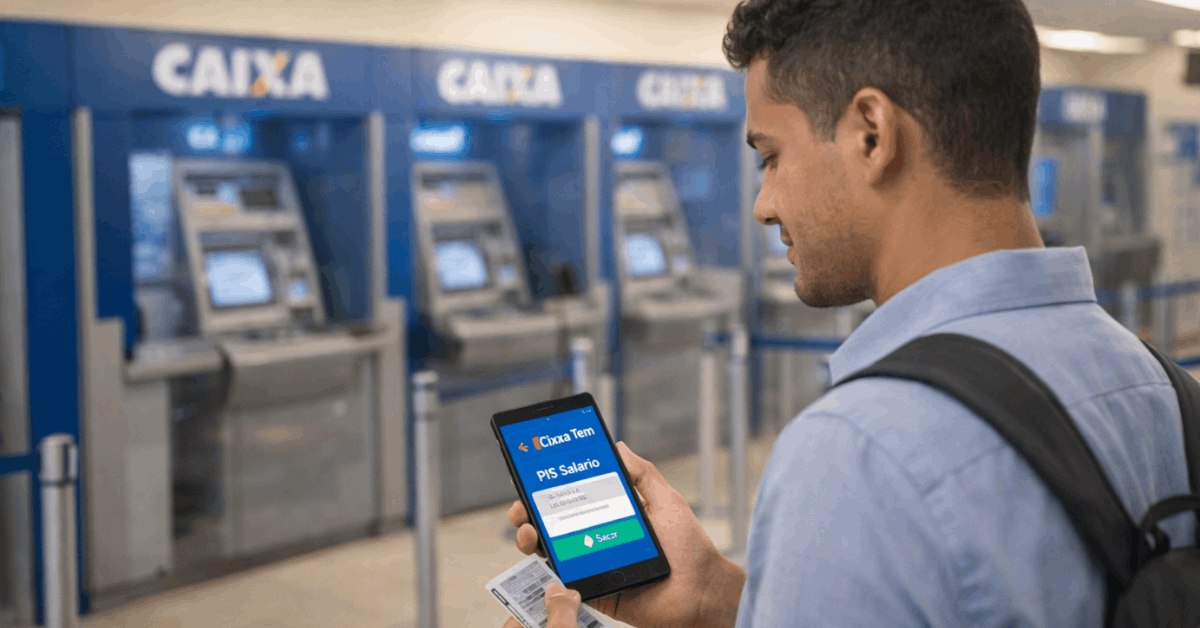
- The app Caixa Trabalhador and Caixa Tem, which allow private sector workers to see PIS balances, scheduled credits, and withdrawal options without queueing at a branch.
- Banco do Brasil’s app and internet banking, where Pasep beneficiaries can confirm entitlement, view the credit date, and request transfers via PIX or TED.
- The Ministry of Labor and Employment helpline and regional offices, which support workers who find inconsistencies or need help regularizing employer declarations.
- Keeping login details safe and always using official portals or apps avoids fraud attempts that target those searching for quick information about the PIS/Pasep Salary Bonus.
Relation To Other Brazilian Worker Benefits
PIS and Pasep numbers sit at the center of several other Brazilian labor and social security systems. The same identifiers help track contributions to the FGTS severance fund, eligibility for unemployment insurance, and records that feed into retirement and pension calculations.
That integration gives public systems a consistent history of formal employment, income, and employer contributions.
Reliable Data on PIS/Pasep
Reliable data on PIS/Pasep also reduces bureaucracy when requesting seguro desemprego, since the system can automatically match previous contracts and salaries.
In the same way, FGTS consultations through digital channels often use the same CPF and benefit links, allowing workers to see balances and withdrawals alongside their abono salarial 2026 rights. Correct registration, therefore, supports a wider set of protections beyond the yearly bonus itself.
Retirement claims, whether through the general social security regime or special public servant rules, also benefit from consistent PIS or Pasep histories. Long-term accuracy across all these systems helps ensure that benefits are calculated correctly when formal work decades come to an end.
Common Problems and How To Avoid Them
Many complaints about missing payments trace back to basic data issues rather than failures of the PIS/Pasep Salary Bonus program itself. Employers sometimes send RAIS or eSocial declarations late or with errors, which prevents the system from recognizing the worker as eligible.
Other times, the employee changes bank, address, or contact details and never updates the records that the paying bank relies on. Practical steps that reduce the risk of problems include regular checks in the digital channels and early communication with employers whenever contracts change.
Monitoring the annual calendário PIS Pasep and noting the expected credit date leaves enough time to fix wrong information while the calendar remains open. Confusing PIS with Pasep also creates hurdles, particularly for workers who moved from the public to the private sector or vice versa.
Ministry of Labor and Employment
Formal complaints through the Ministry of Labor and Employment are available when standard channels fail to resolve an issue.
These usually require supporting evidence such as pay slips, signed work contracts, or documents showing that income stayed within the legal ceiling.
Patience helps here because investigations can take time, but persistence often recovers amounts that the system initially failed to release.
Final Checks To Secure Your Annual Bonus
PIS/Pasep Salary Bonus rules may feel dense at first glance, but a few core habits keep everything under control. Knowing the base year, confirming that income stayed within the ceiling, and checking whether at least 30 days of formal work were completed all signal a strong chance of entitlement.
Once those points align, the focus shifts to confirming that the employer provided clean information to RAIS or eSocial and that bank details remain up to date.
Awareness of the 2026 calendar and the final withdrawal deadline of 29 December prevents a valid payment from becoming an overlooked credit. Treating the PIS/Pasep Salary Bonus as an earned right, not an automatic gift, naturally leads to more careful tracking and fewer unpleasant surprises at year-end.