

Thinking about changing banks in Spain? It’s honestly more common than people might expect, especially with so many banks updating their rates, digital services, and account rules each year.
If you’ve started to feel like your current bank no longer fits your needs—or maybe the fees keep climbing—it can seem tempting just to move your account elsewhere. But is it always that simple? Maybe not.
This guide is designed for anyone in Spain considering a switch, whether you’re a resident, a newcomer, or just looking for something better.
Why People Consider Switching Banks in Spain
Banking habits across Spain have shifted, especially with more people choosing online or mobile-first institutions. Some switch because of high fees, while others are driven by customer service issues.
I’ve even heard of friends fed up with queues or slow apps finally taking the plunge after just one annoying experience.
There’s also the wave of new digital banks, promising lower costs and sleek interfaces, adding more choices than ever before. But are those choices all equal? Not really.
Main Things to Compare When Weighing Banks
Perhaps the most important step is to clarify exactly what you need from your new bank. It may sound basic, but expectations vary. Let’s look closer at several key factors most people in Spain consider when evaluating banks.
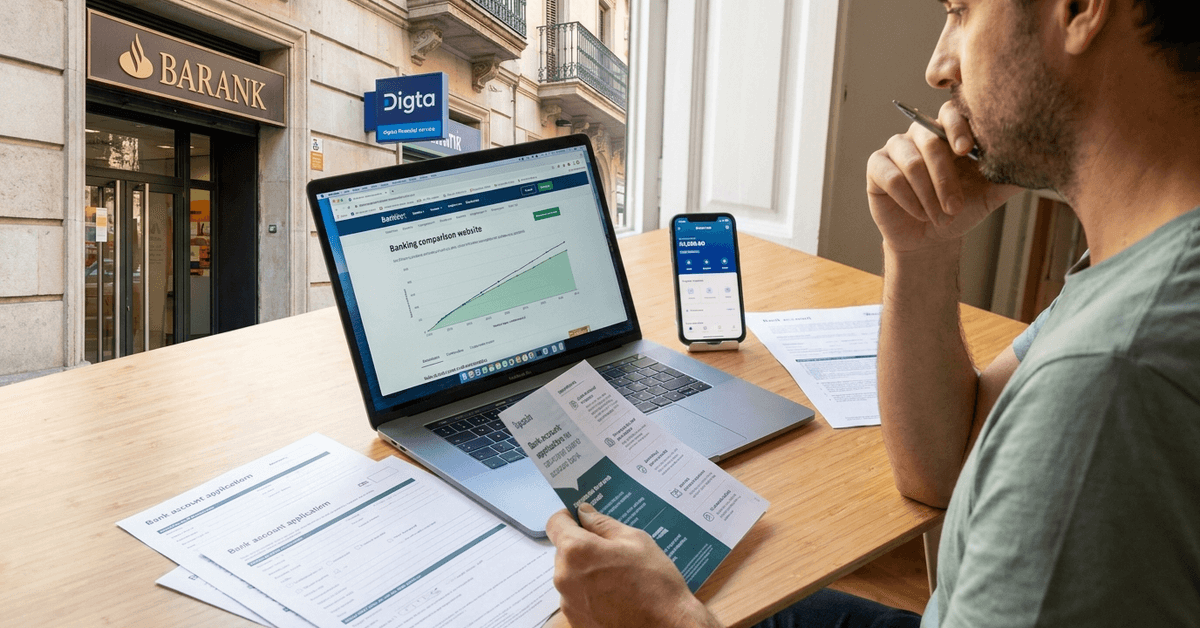
1. Account Maintenance Fees
Monthly fees are common in Spain, although some digital banks offer fee-free options if certain conditions are met. But those conditions aren’t always easy—sometimes they require a minimum monthly deposit or tying in your salary.
Traditional banks may charge for basic accounts, and extras like extra cards, statements, or even currency conversions can add costs. Checking the real effective cost—not just the headline figure—is worth the effort.
2. ATM Network and Accessibility
Spain’s large banks each have their own ATM networks, but withdrawals at out-of-network machines can rack up fees. People often overlook how much these small charges add up over time, particularly if you travel.
Some online banks partner with major ATM networks for wider access. Comparing ATM reach might seem trivial, but actually, it can save a lot.
3. Online and Mobile Banking Experience
Mobile banking feels almost like a given these days. The difference between a user-friendly app and a clunky, buggy one can be stark.
If you handle most tasks online—transfers, bill payments, or even chat support—it helps to try demo accounts or explore reviews. Not every app, in my experience, gets the basics right. And, perhaps surprisingly, even some big names lag behind newer entrants.
4. Customer Support Quality
How easily can you reach the bank if something goes wrong? Is there 24/7 support, or are their lines only open during specific hours?
In Spain, some branches are reducing opening times, making access harder. A good customer support reputation doesn’t guarantee perfection, but it may reduce headaches during crunch times.
5. Foreign Transfers and Currency Exchange
Many banks in Spain charge fees for sending or receiving money internationally. Conversion rates also vary widely. If you deal with different currencies, that’s a factor to scrutinize, especially if you’re an expat or conduct business globally.
Some digital banks may offer multicurrency accounts or low-fee transfers—a significant perk for certain users.
6. Interest Rates on Savings Accounts
Savings accounts in Spain can offer wildly different interest rates depending on the institution.
While some banks promote “high yield” rates, the fine print often limits how much can actually earn interest at that level. The difference between 0.1% and 1% might not matter for small balances, but it does add up over time.
7. Added Services and Value Extras
Some banks throw in perks—travel insurance, cashback deals, discounts on utility bills. There can be hidden catches, though.
Sometimes benefits are tied to specific account tiers or require maintaining higher balances. It’s a nice touch for some, but not always worth paying extra.
Hidden Costs and Common Pitfalls When Changing Banks
Though switching feels straightforward at first glance, several less obvious costs or issues can pop up.
Account Closure Fees
Not all banks charge these, but some in Spain might. Always check the terms before requesting closure. Even small administrative charges can be frustrating.
Automatic Payments and Direct Debits
Transferring all recurring payments—utilities, subscriptions, tax payments—over to a new account is crucial. Missing a direct debit can sometimes mean late fees or service interruptions.
Some banks offer “switching assistance” to help, but it still usually requires careful monitoring for a month or two.
Minimum Income Requirements
Promotional accounts with no fees may require a minimum monthly deposit, such as salary. Falling short even once in a while can mean losing those perks or triggering charges.
Overdraft and Credit Line Terms
These details can be overlooked during the excitement of a new account. Interest rates, limits, and even penalties for exceeding limits can vary widely.
Comparing Digital vs. Traditional Banks in Spain
Digital banks are never quite the same as the old names in Spanish banking. Let’s compare the most relevant differences for would-be switchers.
Digital Banks
Digital banks offer a modern way to manage money online, often with convenient apps, lower fees, and faster account access.
- Lower Fees and fewer paperwork barriers
- Fast online setup
- Larger ATM alliances, sometimes international
- Usually no cash deposit options
- Remote-only customer service
Traditional Banks
- Physical branches for cash deposits and face-to-face service
- More comprehensive lending options
- Established brand reputation
- Higher or more complex fee structures
For many, a hybrid approach—keeping an account at both a digital and a traditional bank—ends up being more practical. Not everyone, of course, wants to juggle multiple accounts, but it’s an option worth thinking about for certain banking needs.
Step-by-Step: How Switching Banks Works in Spain
The administrative side of changing banks can seem daunting, but it’s mostly a repeatable process. It usually goes something like this:
- Open your new account before closing the old one
- List all direct debits and recurring payments to update
- Inform your employer or pension provider of new banking details
- Check all outstanding transactions clear from your original account
- Request account closure and written confirmation (if needed)
It sounds methodical, but, honestly, it can get a little messy. Some providers are quicker with paperwork than others. Perhaps, a brief overlap with both accounts open is inevitable just to be safe.
Legal and Tax Considerations in Spanish Banking
Spain’s strict banking laws require all financial institutions to verify your identity and residence. Non-residents can open accounts, but might need extra documentation.
Additionally, if you have significant savings, be aware of the Patrimonio tax (wealth tax), which is unique to certain regions. Tax residency status can impact reporting obligations too, especially for expat residents.
If unsure, consulting a tax advisor—preferably someone familiar with Spanish financial laws—can avoid costly misunderstandings.
Data Protection
It’s also worth mentioning that banks in Spain are tightly regulated for privacy and data security under EU law. Still, reading privacy policies carefully might reveal subtle differences in how your data is managed.
Conclusion
Switching banks in Spain can be a worthwhile move when you carefully compare fees, services, digital features, and account requirements.
Planning the transition in advance and reviewing any potential costs can help ensure a smooth switch while choosing a bank that better supports your financial needs.